Have you ever wondered why your premium serums seem to sit on the surface of your skin rather than sinking in to do their work? It's a common frustration for many who find that despite a dedicated routine, their complexion still feels dull or their makeup looks heavy against fine vellus hair. You aren't alone in wanting a more efficient way to achieve that elusive, radiant glow. It can feel like you're hitting a plateau where your products just can't penetrate the layers of dead skin cells and peach fuzz.
This physician-led guide explains exactly what is dermaplaning good for and why it's a strategic favorite in modern aesthetic care. We'll show you how this medical-grade exfoliation creates a flawless canvas by removing the physical barriers that hold your skin back. It's a precise process that bridges the gap between clinical science and boutique beauty. You'll discover how a professional treatment can enhance your product absorption and provide a smooth, glass-skin finish with absolutely no downtime. We'll also explore why this treatment has become a mainstream essential for those seeking a revitalized, natural look through a safe and personalized approach.
Key Takeaways
- Learn how medical-grade exfoliation uses a sterile surgical blade to gently remove dead skin cells and fine vellus hair for a smoother surface.
- Understand exactly what is dermaplaning good for, from achieving instant radiance to significantly boosting the efficacy of your medical-grade serums.
- Discover the truth behind common myths and why professional dermaplaning won't cause your facial hair to grow back thicker or darker.
- Identify why professional treatments are safer than drugstore tools, which often lead to invisible micro-tears and unnecessary skin irritation.
- Find out if you're an ideal candidate for this 'glass-skin' treatment and why those with active cystic acne should seek alternative care.
Beyond Peach Fuzz: What Is Dermaplaning Good For?
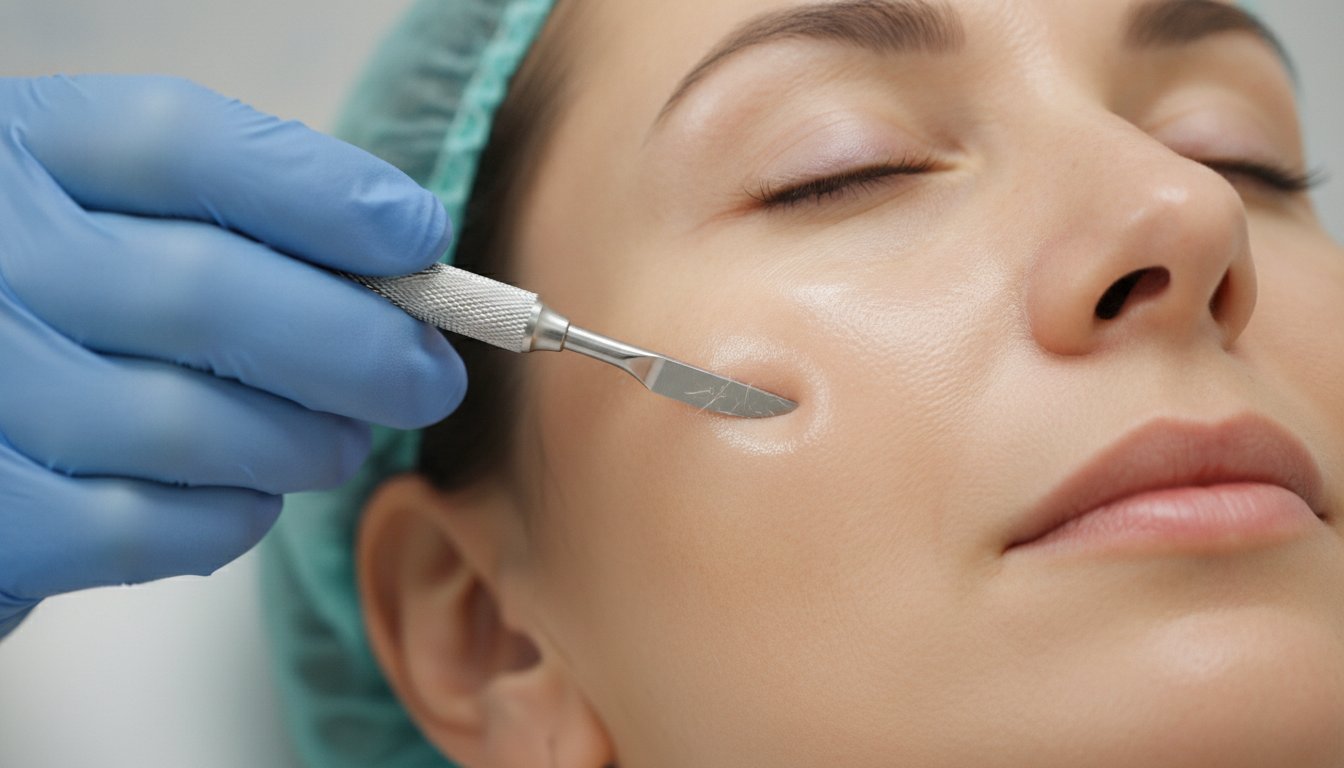
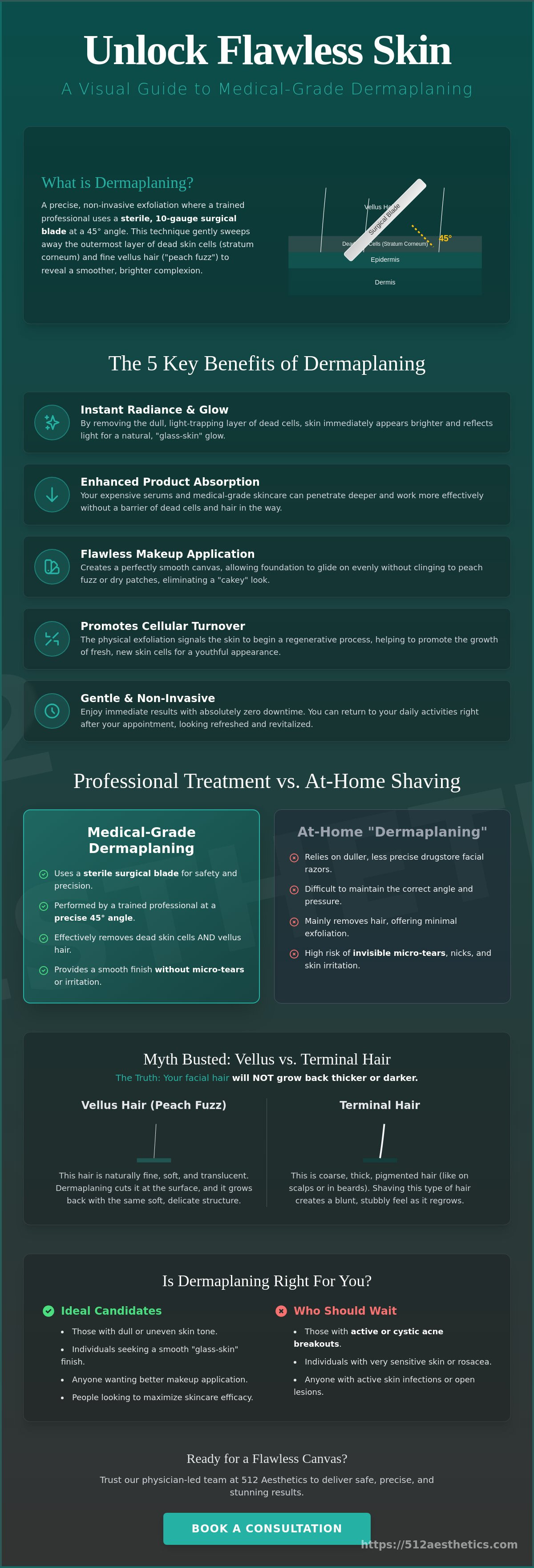
Imagine waking up to skin that catches the light in all the right places, appearing polished and vibrant even without a drop of foundation. This is the promise of dermaplaning, a specialized medical exfoliation that has become a cornerstone of modern skincare routines in Austin. At its core, the treatment involves a highly trained professional using a sterile, 10-gauge surgical blade held at a precise 45-degree angle. This technique gently sweeps away the outermost layer of the skin, known as the stratum corneum, along with fine facial hair.
Many patients initially ask what is dermaplaning good for if they don't feel they have a lot of facial hair. The answer lies in the controlled removal of dead cellular debris. By clearing this dulling layer, we reveal the fresh, healthy cells beneath, resulting in an immediate revitalized appearance that feels as smooth as it looks. This physical resurfacing is a staple for those who want a refined, bright complexion without the use of harsh chemicals.
To better understand this concept, watch this helpful video:
The Science of Physical Exfoliation
Physical exfoliation works by manually lifting away the barrier of dead skin that often contributes to a lackluster tone. While chemical options have their place, understanding what is dermaplaning good for in a physical sense helps you appreciate the instant tactile improvement it offers. This process signals the skin to enter a regenerative state, encouraging a healthier-looking surface over time. We should distinguish this from Dermabrasion, which is a much more invasive medical procedure used for deep scarring. Dermaplaning is a refined, surface-level treatment that delivers the coveted "glass skin" effect with zero downtime, making it a favorite for those with busy Austin lifestyles in 2026.
Vellus Hair vs. Terminal Hair
One of the most satisfying aspects of this treatment is the removal of vellus hair, commonly called peach fuzz. Unlike the thick terminal hair found on the scalp or underarms, vellus hair is translucent and soft. However, it's also a magnet for environmental pollutants, excess oils, and makeup. When these tiny hairs are removed, the skin's surface becomes remarkably uniform. This level of smoothness allows light to reflect evenly off the face rather than being absorbed or scattered by fine hairs. It’s a subtle change that makes a significant difference in professional photography and special events, creating a pristine canvas for our facial treatments and daily skincare. By clearing the path, your complexion looks naturally radiant and feels incredibly soft to the touch.
The 5 Key Benefits of Medical-Grade Dermaplaning
Medical-grade dermaplaning isn't a simple shave; it’s a sophisticated resurfacing technique. When clients ask what is dermaplaning good for, they're often surprised to learn it offers more than just hair removal. This treatment acts as a reset button for your skin, providing five primary advantages that elevate your daily routine and long-term skin health.
- Instant Radiance: By removing the microscopic debris that traps light, your skin can finally reflect it evenly. This creates a natural glow that no highlighter can truly replicate.
- Enhanced Product Absorption: Without a layer of dead cells in the way, your high-end serums can finally reach the deeper layers where they’re most effective.
- Flawless Makeup Application: Foundations glide on smoothly without clinging to peach fuzz or dry patches, ending the cycle of "cakey" or uneven textures.
- Cellular Turnover: Manually removing the top layer prompts the skin to produce fresher cells, promoting a more youthful appearance over time.
- Non-Invasive Nature: There is no downtime involved. You can return to your Austin office or a dinner date immediately after, looking revitalized but never "overdone."
Maximizing Your Skincare Investment
Dead skin cells act like a barrier, soaking up your expensive products before they can do any good. Dermaplaning removes this physical wall, ensuring that active ingredients like Vitamin C or antioxidants actually penetrate the tissue. The "absorption window" is a unique period immediately following your session where the skin is most receptive to nourishment. This is the perfect time to incorporate peptide therapy, as the newly exposed skin can fully utilize these building blocks for a firmer, more resilient complexion. According to WebMD on dermaplaning, this process is safe for most skin types and effectively prepares the face for further clinical treatments.
The Aesthetic 'Primer' Effect
Understanding what is dermaplaning good for on a deeper level helps you see it as the ultimate aesthetic primer. Many of our clients view this as their secret weapon for red-carpet-ready skin or bridal preparations, creating a surface so smooth that it requires fewer filters and less heavy makeup. Beyond the immediate visual gain, it prepares the skin for more intensive aesthetic services like chemical peels, allowing for a more even and effective application. This synergy between treatments is a hallmark of a professional, evidence-based plan designed for subtle, high-end results. It’s an empowering step toward embracing your natural features with newfound confidence.
Dermaplaning vs. At-Home Shaving: Addressing the Objections
Many clients hesitate to book a session because of one persistent myth: the fear that their facial hair will grow back thicker or darker. It's a valid concern if you've only ever used drugstore razors, but it’s biologically impossible for a surface-level treatment to change the structure of your hair follicles. When you understand what is dermaplaning good for in a clinical setting, you realize that the goal is refined skin health, not just hair removal. You can enjoy a velvet-smooth complexion without the worry of coarse regrowth because professional exfoliation doesn't alter your hair's biological structure.
The sensation of "stubble" after home shaving happens because standard razors often leave a blunt, jagged edge on the hair. In contrast, a medical professional uses a specialized 10-gauge surgical blade to expertly sweep away debris. This precision ensures that when vellus hair eventually returns, it does so with its natural, tapered end, feeling just as soft and fine as before.
The Biology of Hair Regrowth
Hair growth is determined by what happens deep within the follicle, far below where a blade can reach. Shaving or dermaplaning cannot turn soft vellus hair into thick terminal hair. If you've seen social media debates suggesting otherwise, they're likely confusing the temporary blunt feel of a home razor with actual physiological changes. As noted by Johns Hopkins Medicine on dermaplaning, the treatment is a safe way to address skin texture and fine hair without altering your natural growth patterns.
Professional Safety Standards
There is a significant difference between a "Tinkle" razor from a drugstore and the sterile environment of a physician-led clinic. At-home tools are often not sharp enough, leading to dragging and microscopic tears in the skin barrier. These tiny injuries can become breeding grounds for bacteria, resulting in folliculitis or unexpected breakouts. Using non-sterile tools at home bypasses the safety protocols that keep your skin healthy.
At 512 Aesthetics, we prioritize safety through our Individualized Assessment Philosophy. Before any blade touches your face, we evaluate your skin's current state to ensure there are no underlying conditions that would make the treatment unsuitable. This level of expert care is exactly what is dermaplaning good for when you want to avoid the risks of DIY methods. By choosing a professional setting, you're investing in a controlled, sterile process that enhances your facial treatments rather than compromising your skin's integrity. You deserve the peace of mind that comes with boutique luxury and clinical expertise.
Who Is Dermaplaning Best For? (And Who Should Skip It)
While the allure of "glass skin" is universal, this treatment is most effective when matched with the right skin profile. Understanding what is dermaplaning good for starts with an honest look at your current complexion. Ideal candidates are typically those struggling with a dull, lackluster tone, dry surface patches, or fine vellus hair that prevents makeup from sitting smoothly. In our Austin environment, environmental pollutants and high UV exposure can lead to a thickened layer of dead skin. Dermaplaning expertly removes this buildup, revealing the fresher tissue beneath.
However, clinical safety means knowing when to pause. We avoid this procedure for anyone experiencing active cystic acne or significant rosacea flares. The blade's movement can unintentionally irritate inflamed areas or spread bacteria across the face. For these sensitive skin types, we prioritize calming the skin first. Our individualized assessment philosophy ensures that every session is tailored to your unique needs, protecting your skin's integrity while pursuing your aesthetic goals.
Dermaplaning for Mature Skin
As we age, our skin's natural cellular turnover begins to lag. This slowdown often results in a buildup that emphasizes fine lines and creates a parchment-like texture. Physical exfoliation is an excellent tool for mature skin because it manually clears this debris, instantly softening the surface. To achieve a truly revitalized outcome, many of our clients choose to pair this exfoliation with Xeomin. This combination addresses both the surface texture and the underlying dynamic lines, offering a refreshed appearance that looks entirely natural.
When to Choose an Alternative
If dermaplaning isn't the right fit for your current skin state, we offer specialized alternatives that deliver equally impressive results. For those dealing with active congestion or oily skin, HydroDiamond Facials provide a deep, liquid-based exfoliation that clears pores without the use of a surgical blade. If your primary concern is deep acne scarring rather than surface fuzz, microneedling might be a better path to stimulate long-term collagen production. A professional consultation is always the first step in determining what is dermaplaning good for in the context of your specific journey.
Discover the best path for your unique complexion by booking a personalized consultation with our skilled specialists today.
The 512 Aesthetics Experience: Physician-Led Skin Health
At 512 Aesthetics, we believe that medical expertise should feel personal rather than clinical. Led by Dr. Saima Jehangir, our boutique Austin environment is designed to bridge the gap between advanced scientific standards and high-end, personalized care. We move away from the sterile coldness of traditional medical offices to offer a sanctuary where you feel empowered and understood. Our focus remains on subtle, revitalized outcomes that celebrate your natural features rather than masking them.
When our clients ask what is dermaplaning good for in a professional setting, we often point to its role as a foundational treatment. It isn't just an isolated service; it’s a strategic step that we layer with other advanced procedures to maximize your results. By clearing the path with a sterile surgical blade, we ensure that every subsequent treatment reaches its full potential. This collaborative approach ensures your skin journey is as unique as you are, rooted in a partnership between you and our highly skilled specialists.
A Collaborative Approach to Beauty
We view every consultation as a conversation about your personal aesthetic desires. Our team doesn't follow a top-down medical directive. Instead, we use an evidence-based philosophy to create a plan that fits your lifestyle and goals. This craftsmanship allows us to tailor the frequency of your treatments to your specific skin cycle, which typically lasts about four to six weeks. By aligning our clinical methods with your body's natural regenerative pace, we maintain that coveted "glass skin" finish without over-processing the tissue.
Our commitment to safety is a core pillar of the 512 Aesthetics experience. Having a physician-led team means that your skin health is monitored with the highest level of professional credibility. We use only medical-grade tools and follow strict protocols to ensure your safety and comfort. This meticulous attention to detail is what is dermaplaning good for when you want to move beyond basic grooming into the world of genuine skin revitalization.
Booking Your Revitalization
Taking the first step toward a more radiant complexion should be effortless and rewarding. We've streamlined our process to make booking your aesthetic services simple and transparent. Whether you're coming to us from Round Rock or seeking care in South Austin, our boutique approach remains consistent across the entire Austin area. We pride ourselves on being a local anchor in the community, offering a non-corporate feel that prioritizes your comfort and self-assurance.
Your journey toward vibrant, healthy skin starts with a personalized assessment where we can discuss your objectives in detail. In 2026, the trend is moving toward "skinimalism"—focusing on fewer, more effective treatments that deliver real results. Dermaplaning fits perfectly into this philosophy by providing immediate visible benefits with no downtime. You have the power to revitalize your routine and reclaim your glow; we're simply here to provide the expert craftsmanship and care to make it happen. Connect with us today to schedule your session and experience the difference of physician-led skin health.
Your Journey to a Polished, Radiant Complexion
Dermaplaning is more than a simple beauty trend; it’s a foundational treatment that clears the way for your entire skincare routine to perform at its peak. By removing the physical barrier of dead cells and vellus hair, you unlock a level of smoothness that makeup and serums simply can't achieve on their own. You've learned how professional care avoids the pitfalls of at-home methods, ensuring your skin remains healthy, sterile, and perfectly primed for deeper treatments. This process isn't about changing who you are, but rather about enhancing the natural features that make you unique.
When considering what is dermaplaning good for, the answer lies in the combination of instant luminosity and long-term skin health. At 512 Aesthetics, Dr. Saima Jehangir and our expert team have been serving the greater Austin area since 2021. We specialize in those subtle, revitalized outcomes that leave you feeling refreshed and self-assured. Our boutique environment ensures that your path to radiant skin is both safe and deeply personal.
Book your refined dermaplaning experience at 512 Aesthetics and step into a collaborative partnership dedicated to your unique aesthetic goals. We're ready to help you discover the confidence that comes with a truly luminous, glass-skin finish.
Frequently Asked Questions
Is dermaplaning good for acne-prone skin?
Dermaplaning is not recommended for those with active, cystic acne or inflamed breakouts. The surgical blade can nick existing blemishes, which risks spreading bacteria and worsening the inflammation. However, if your skin is clear but you have lingering texture or superficial irregularities from past breakouts, the treatment is an excellent way to smooth the surface.
How often should I get dermaplaning done for the best results?
You should schedule your sessions approximately every four to six weeks to align with your skin's natural cellular turnover. This timing ensures that we remove the buildup of dead skin cells just as the new layer is ready to emerge. Maintaining this rhythm keeps your complexion consistently bright without over-exfoliating the delicate skin barrier.
Will dermaplaning make my facial hair grow back thicker?
Your facial hair will not grow back thicker, darker, or coarser after this treatment. Dermaplaning targets vellus hair, which is biologically different from the terminal hair on your head or underarms. Because we aren't affecting the follicle itself, the hair will return exactly as it was: soft, fine, and translucent.
What should I not do after a dermaplaning treatment?
Avoid direct sun exposure and intense heat, such as saunas or heavy workouts, for at least 48 hours after your session. Your skin is freshly exfoliated and more vulnerable to UV damage and irritation. You should also skip active ingredients like retinols or alpha-hydroxy acids for three days to allow your skin's natural moisture barrier to remain intact.
Can dermaplaning help with dark spots or hyperpigmentation?
Dermaplaning can help brighten your overall tone, but it isn't a direct treatment for deep hyperpigmentation. When considering what is dermaplaning good for in this context, its primary value is enhancing the penetration of your brightening serums. By removing the dead skin barrier, ingredients like Vitamin C or kojic acid can work more effectively on stubborn dark spots.
How long do the results of a dermaplaning session last?
The immediate glow and smooth texture typically last for about three to four weeks. While the physical removal of dead skin is permanent for those specific cells, your body constantly produces new ones. Most clients notice that their makeup applies most flawlessly during the first twenty-one days following their visit.
Is dermaplaning painful or does it feel like shaving?
The procedure is entirely painless and often described as a relaxing, meditative experience. You might feel a light feathering or scratching sensation as the blade moves across the skin, similar to the feeling of a cat's tongue. Because it's a non-invasive resurfacing method, there is no need for numbing creams or local anesthetics.
Can I combine dermaplaning with a chemical peel or facial?
Dermaplaning is an exceptional primer for other services like chemical peels or hydrating facials. By clearing away the stratum corneum first, the active solutions in a peel can penetrate more evenly and deeply. This synergy is exactly what is dermaplaning good for when you want to maximize the revitalized outcome of your entire aesthetic plan.