
What if the secret to your filler’s longevity isn't just about what happens in the treatment chair, but how you manage your metabolism at home? It’s a common frustration to invest in your confidence only to feel like those refined results are fading just as you’ve grown to love them. You aren't alone in wanting to protect your aesthetic investment, and many clients feel a shared anxiety when they aren't sure exactly how to make fillers last longer between their boutique appointments.
We believe that maintaining a revitalized, natural look is a collaborative partnership between our technical precision and your daily stewardship. In this guide, you’ll discover the clinical secrets and simple lifestyle adjustments that extend the life of your dermal fillers for a long lasting glow. We will walk you through a clear maintenance schedule and the science of skin health, ensuring your Restylane treatments or facial balancing results remain vibrant for 12 months or more.
Key Takeaways
- Understand the biological role of hyaluronidase and learn the scientific secrets to slowing the natural dissolution process of your Restylane treatments.
- Master the essential post-injection protocols for the first 48 hours to prevent migration and ensure your natural-looking volume settles beautifully.
- Discover physician-led secrets on how to make fillers last longer by managing metabolic triggers and Austin’s environmental stressors that impact longevity.
- Find out why the "stacking" technique of small, frequent touch-ups is more effective for maintaining a consistently revitalized glow than waiting for total depletion.
- Explore how combining fillers with neurotoxins like Xeomin or Dysport can reduce muscle-driven breakdown to preserve your aesthetic investment.
The Science of Filler Longevity: Why Results Fade
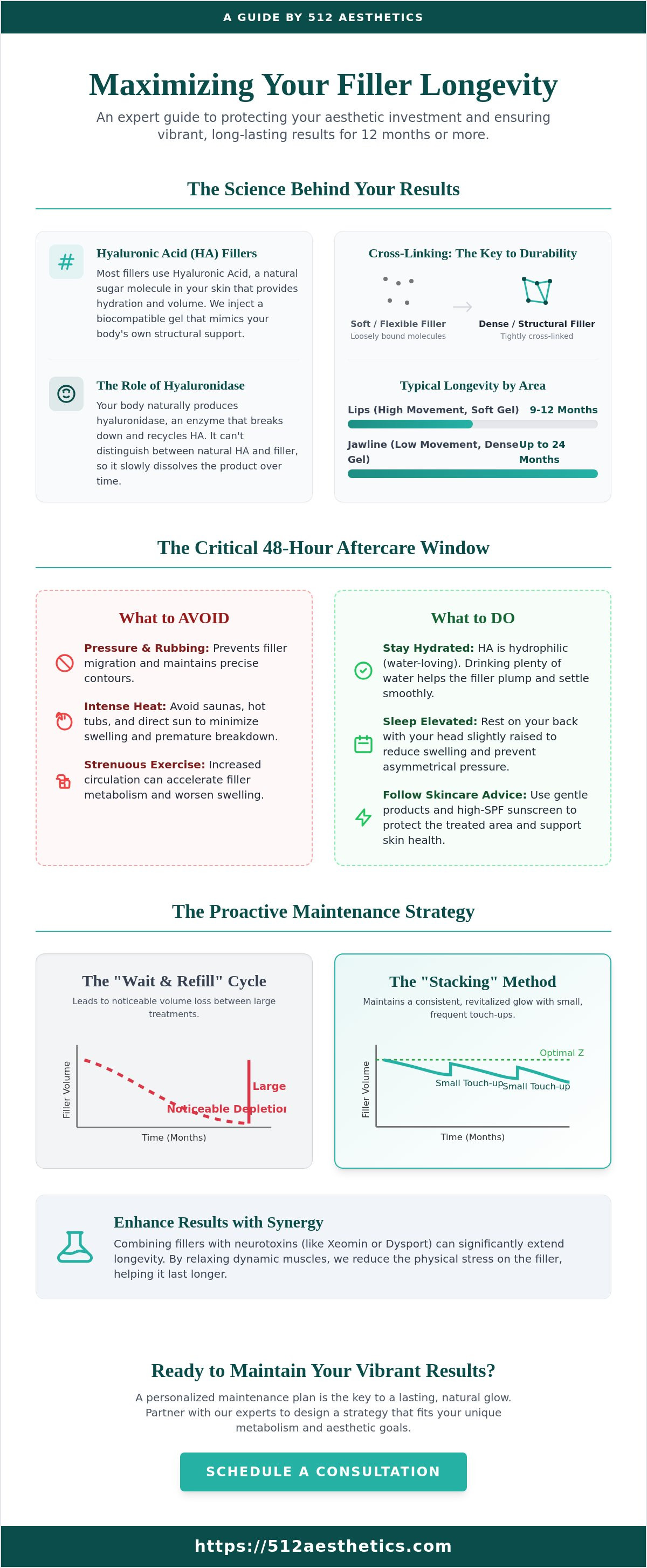
Most modern dermal fillers are crafted from Hyaluronic Acid (HA), a sugar molecule that occurs naturally in your skin to maintain hydration and volume. When we use the Restylane Collection, we're placing a biocompatible gel that mimics your body’s own structural scaffolding. However, your body doesn't view this as a permanent fixture. Understanding injectable filler materials and their lifecycle is the first step in learning how to make fillers last longer.
Your body produces a specific enzyme called hyaluronidase. Its primary biological job is to break down and recycle the HA already present in your tissues. Because your body cannot distinguish between your natural HA and the filler we have meticulously injected, it begins to slowly dissolve the product from the moment it's placed. This enzymatic recycling is the reason why results aren't forever. It's a steady, biological clock that ticks at a different pace for every individual.
To combat this natural process, manufacturers use cross-linking technology. Think of this like weaving individual threads into a sturdy rope. The more tightly the HA molecules are bound together, the harder it is for hyaluronidase to pull them apart. This is why a dense product used for facial balancing in the jawline might last up to 24 months, while a softer, more flexible gel for the lips might only last nine to twelve months.
Metabolism and the Rate of Absorption
Your internal engine plays a massive role in how quickly you'll need a touch-up. Clients with a high basal metabolic rate often find that their bodies process fillers faster than average. If you're a fan of high-intensity interval training (HIIT), your elevated body temperature and increased blood circulation can subtly accelerate the breakdown of these materials. Fast metabolizers don't have to settle for short-lived results, but they do require a more proactive maintenance strategy to keep their glow consistent. We often recommend slightly more frequent, smaller sessions for those with active lifestyles to stay ahead of the absorption curve.
Dynamic Movement and Injection Site
Placement is just as vital as the product itself. The face is a landscape of constant motion. Areas with high dynamic movement, specifically the lips, experience a mechanical breakdown of the filler gel. Every time you smile, talk, or eat, you're essentially massaging the product, which encourages the body to absorb it faster. Conversely, filler placed deep against the bone in the cheeks or chin stays relatively still. By choosing strategic depths and sites, we can help you understand how to make fillers last longer by minimizing this physical wear and tear on the product.
The Critical 48-Hour Window: Post-Injection Aftercare
The artistry of your treatment doesn't end when you leave the boutique; it actually enters a high-stakes setting phase. The first 48 hours represent a critical period where the gel integrates with your natural facial architecture. During this window, following strict protocols is essential for anyone researching how to make fillers last longer while maintaining the precision of their initial results. Think of your filler as a delicate mold that needs time to cure without interference.
We emphasize a strict "no-touch" rule during these first two days. Because the gel remains malleable shortly after injection, rubbing or applying pressure can force the product through the interstitial spaces of your tissue. This leads to migration, where the filler shifts away from the targeted contours and into adjacent areas, softening the intended definition. Strategic sleeping is equally vital. We recommend resting on your back with your head slightly elevated to prevent asymmetrical pressure from your pillow from reshaping your new contours overnight.
Heat is another invisible risk to your investment. High temperatures from saunas, hot tubs, or the intense Austin sun cause blood vessels to dilate and increase local circulation. This not only intensifies swelling but can also trigger an early inflammatory response that begins breaking down the filler molecules before they've settled. Since hyaluronic acid is naturally hydrophilic, it acts like a sponge, drawing in moisture to create volume. Staying exceptionally hydrated during this window helps the filler "plump" and settle into a smooth, revitalized finish. For those seeking more safety details, the FDA information on dermal fillers provides a comprehensive look at how these products interact with your body.
Managing Swelling and Pressure
A gentle touch is your best tool for a smooth recovery. Cold compresses can effectively manage swelling and lower the temperature of the tissue, but you should avoid pressing down firmly on the injection sites. We also advise steering clear of blood thinners like alcohol or NSAIDs for at least 24 hours. These substances can increase the risk of bruising and compromise the initial placement of the product. While some tenderness is normal, you should contact us if you notice unusual skin blanching or severe pain, as these require immediate professional assessment.
Activity Restrictions for Maximum Integration
Patience is a virtue when it comes to physical activity. We recommend a 24 to 48 hour ban on vigorous exercise to prevent increased metabolic heat and blood flow from disrupting the filler's integration. Similarly, you should postpone facial massages and dental work for at least two weeks. These activities involve significant pressure or prolonged facial stretching that can displace the product before it's fully anchored. Understanding these limitations is a key part of how to make fillers last longer and perform as expected. For a complete list of personalized protocols, you can review our Aesthetic Services aftercare guide. If you're ready to plan your next revitalized look, consider a consultation for facial balancing to ensure your results stay as intended.
Lifestyle Factors That Influence Filler Metabolism
Your daily habits act as the silent architect behind your aesthetic longevity. While the injection technique is foundational, your internal biological environment determines how quickly those results dissipate. Clinical observations suggest that specific micronutrients play a pivotal role in prolonging filler results. One often overlooked factor is the "Zinc connection." Zinc is a critical co-factor for the enzymes that maintain skin integrity. Some practitioners and patients have found that consistent Zinc supplementation can potentially extend the lifespan of both neurotoxins and dermal fillers by supporting the structural stability of the skin's matrix.
High stress levels are more than just a mental burden; they're a physical catalyst for filler degradation. When you're under chronic stress, your body releases cortisol. This hormone can trigger inflammatory responses that don't just affect your mood, but actively degrade your skin’s collagen and elastin fibers. These fibers are the very structures that hold your filler in place. By managing your cortisol through wellness practices, you're essentially protecting the scaffolding of your face. It's a holistic approach that ensures your subtle enhancements remain as intended for as long as possible.
Nutrition provides the raw materials for skin health and filler support. Vitamin C and specific amino acids are the building blocks of collagen production. Without these essential nutrients, your skin loses the resilience needed to keep fillers looking their best. Additionally, because Hyaluronic Acid (HA) fillers are hydrophilic, they require consistent internal moisture. If you're chronically dehydrated, your fillers may appear less voluminous. Maintaining a high level of hydration is a simple yet effective way to ensure your Restylane Collection results stay plump and revitalized.
Managing Metabolic Burn-Off
Athletes and high-energy individuals often face the challenge of metabolic burn-off. When your body is in a constant state of high activity, it processes everything faster, including your aesthetic treatments. This is particularly relevant for those exploring medical Weight Management. Significant weight loss can lead to a decrease in the facial fat pads that naturally support your skin. Balancing your weight goals with targeted facial treatments ensures that your body stays lean while your face remains youthful and full. We recommend a personalized assessment to adjust your maintenance schedule based on your specific activity levels.
Sleep and Stress Reduction
Quality sleep is your body’s natural regenerative phase. During deep sleep, cellular repair is at its peak, which helps the filler gel integrate more seamlessly into your tissue. Chronic sleep deprivation keeps cortisol levels elevated and accelerates the natural aging process. Integrating simple wellness practices isn't just good for your general health; it's a strategic move for anyone wondering how to make fillers last longer. Your results will always look more natural and revitalized when your body is rested and in a state of repair rather than a state of survival.
Skincare and Environmental Protection for Injectables
Protecting your aesthetic investment requires a shift in focus from the treatment room to your daily vanity. While your provider ensures the precision of the injection, your skincare routine acts as a protective shield for the product beneath the surface. Environmental stressors, particularly in high-UV regions, can silently accelerate the degradation of even the most premium gels. Understanding the chemistry of external protection is a vital component of how to make fillers last longer while maintaining a youthful, revitalized complexion.
The Austin sun is arguably the most significant external threat to filler longevity. Ultraviolet radiation penetrates deep into the dermis, where it triggers the production of free radicals. These unstable molecules create oxidative stress that breaks down both your natural collagen and the hyaluronic acid bonds in your filler. By utilizing medical-grade skincare, you're providing your skin with higher concentrations of active antioxidants that neutralize this damage before it can reach the deeper layers of your tissue. Medical-grade formulations, such as the Circadia line, are engineered to penetrate more effectively than over-the-counter alternatives, offering a level of craftsmanship that matches the quality of your clinical treatments.
Topical hyaluronic acid also plays a supportive role. While it cannot replace the volume of an injectable, it maintains surface hydration and prevents the skin from becoming "thirsty." When the skin is well-hydrated from the outside in, it places less metabolic demand on the internal filler, helping to preserve that subtle, dewy glow. This synergy between internal and external care ensures your results remain vibrant and structurally sound for as long as possible.
The Texas UV Defense Strategy
In Central Texas, a broad-spectrum SPF 30+ is a non-negotiable requirement for every filler patient. Beyond direct DNA damage, the intense heat of the region can cause subtle, chronic inflammation. This heat-induced stress encourages the body to process fillers more rapidly than they would in cooler climates. Consistent use of physician-selected protection, like the options found through Circadia Skincare, provides a barrier against both thermal and radiation-driven breakdown. It's a simple daily habit that pays significant dividends in your long-term aesthetic maintenance.
Complementary Treatments for Skin Integrity
A healthy "canvas" is essential for optimal filler performance. Treatments that improve skin texture and thickness, such as chemical peels or a HydroDiamond Facial, create a more resilient environment for your injectables. There is also a powerful synergy between Microneedling for Skin Rejuvenation in Austin and dermal fillers. By stimulating your own collagen production through microneedling, you provide a sturdier structural matrix that helps hold the filler in place. This multi-layered approach is the professional secret to achieving results that look natural and last significantly longer. To ensure your skin is perfectly prepared for your next treatment, book a personalized skin assessment to design your custom protection plan.
Designing a Personalized Maintenance Plan
Longevity isn't a one-time event; it's a strategic sequence of care. While structural fillers in areas like the cheeks or jawline can last between 18 to 24 months, the most sophisticated approach to how to make fillers last longer involves a technique known as "stacking." Instead of allowing the product to fully dissipate before your next visit, we recommend small, frequent touch-ups. This incremental method maintains a consistent level of support for your tissue, preventing the dramatic volume fluctuations that can occur when you wait too long between appointments. It ensures your results remain indistinguishable from your natural features.
A consistent partnership with your physician is the cornerstone of this long-term strategy. Your facial anatomy is as unique as a fingerprint, and having a provider who understands your specific aging trajectory is invaluable. By returning to the same specialist, you ensure that every injection builds upon the previous one with precision and craftsmanship. This collaborative relationship allows for a more nuanced assessment of how your body metabolizes specific gels over time, allowing us to adjust the density and placement of the product for a perpetually revitalized look.
The Power of Combination Therapy
True artistry often requires a multi-modality approach to protect your aesthetic investment. When we perform Facial Balancing with the Restylane Collection, we frequently look at how muscle movement impacts the lifespan of the gel. In high-tension areas like the forehead or glabella, repetitive muscle contractions can essentially "squish" the filler gel, accelerating its mechanical breakdown. By integrating neurotoxins like Xeomin or Dysport, we temporarily relax these muscles. This creates a calmer environment that allows the filler to remain undisturbed and structurally sound. For a deeper look at this synergy, explore our guide on Botox in Austin: A Physician-Led Guide.
The Elite Membership Advantage
Consistency is often the hardest part of any wellness routine, but it's the most rewarding for your skin health. Our Elite Membership Club was designed to remove the guesswork from your aesthetic schedule. Members benefit from routine assessments that identify the earliest signs of volume depletion before they become noticeable to the naked eye. This proactive stance prevents "filler fatigue," which is the look of over-filling that occurs when too much product is added at once to compensate for total loss. A structured plan ensures your glow is perpetually revitalized rather than reactive. If you're ready to secure your long-term results, book your personalized consultation at 512 Aesthetics today.
Secure Your Aesthetic Investment with Expert Care
Maintaining a subtle and revitalized look is more than just a single treatment; it's a commitment to your skin's ongoing health and structural integrity. By mastering the 48-hour aftercare window and shielding your face from the intense Austin sun, you've already taken the first steps toward protecting your contours. We've explored how a personalized maintenance plan, combining physician-led precision with metabolic stewardship, is the ultimate answer for how to make fillers last longer. This holistic strategy ensures that your results don't just fade away but remain vibrant and cohesive with your natural features.
At 512 Aesthetics, we prioritize a collaborative partnership that celebrates your unique facial anatomy. As a physician-owned and operated boutique led by Dr. Saima Jehangir, we specialize in outcomes that feel as natural as they look. Whether you’re interested in our Elite Membership Club for structured, stress-free maintenance or want to explore the synergy of combination therapies, we’re here to guide your aesthetic journey with safety and expert care. We believe your confidence deserves an investment that stands the test of time.
Schedule Your Physician-Led Filler Consultation in Austin and discover the peace of mind that comes with long-lasting, hand-selected treatments. Your most vibrant, revitalized self is just one conversation away.
Common Questions About Filler Longevity
Does drinking more water really make fillers last longer?
Hydration is essential because hyaluronic acid fillers are naturally hydrophilic, meaning they attract and bind to water molecules. When you stay well-hydrated, the filler remains plump and integrated with your tissue. If you're chronically dehydrated, the product can appear slightly diminished in volume. Maintaining consistent water intake is a simple, effective way to ensure your revitalized look remains vibrant and full.
Can exercise make my fillers dissolve faster?
High-intensity exercise can potentially speed up the body's metabolic processes, which may lead to a faster breakdown of the filler gel over time. While we don't discourage an active lifestyle, athletes often find they need touch-ups sooner than less active individuals. It's best to avoid vigorous workouts for the first 48 hours to ensure the product settles without migration or heat-induced inflammation.
Is there a specific supplement I should take after getting fillers?
Zinc is a valuable supplement that supports the structural integrity of your skin and may help extend the life of your injectables. Clinical observations suggest that maintaining healthy zinc levels provides the enzymatic support necessary for skin resilience and longevity. Always consult with your provider during your initial assessment to determine if specific supplements like Zytaze align with your personal aesthetic goals and overall wellness plan.
How often should I get filler touch-ups to maintain a natural look?
Maintenance schedules vary based on the treatment area and the specific product density used. Lip fillers typically benefit from a refresh every nine to twelve months, while structural enhancements in the cheeks or jawline can last up to 24 months. We recommend the "stacking" technique, where small touch-ups are scheduled before the product has completely dissolved to keep your results looking consistently natural and refined.
Does the brand of filler (Restylane vs. others) affect how long it lasts?
The specific technology behind a brand like the Restylane Collection significantly influences how long the product remains in the tissue. Restylane utilizes various cross-linking methods to balance flexibility with longevity, ensuring the gel moves naturally with your facial expressions while resisting enzymatic breakdown. Choosing the right density for your specific anatomy is a key part of how to make fillers last longer and perform beautifully over time.
Can heat or sun exposure actually melt my fillers?
Fillers do not literally melt, but excessive heat and UV exposure trigger inflammation that can degrade the hyaluronic acid bonds. In the intense Austin climate, protect your investment by wearing broad-spectrum SPF 30+ and avoiding saunas or hot tubs immediately following your treatment. This prevents the thermal stress that leads to premature absorption of the product and helps maintain your subtle, revitalized outcomes.
What should I avoid doing immediately after my filler appointment?
You should avoid touching the injection sites, engaging in vigorous exercise, or consuming alcohol for the first 48 hours. These activities increase blood flow and the risk of bruising, which can disrupt the initial settling of the filler. Postponing dental work and facial massages for at least two weeks is also necessary to prevent accidental displacement of the gel before it has fully anchored into the tissue.
Does my metabolism affect how long my lip fillers will last?
Your metabolic rate directly impacts the lifespan of lip fillers because the lips are a high-movement area with significant blood flow. If you have a naturally fast metabolism, your body may process the hyaluronic acid more quickly than average. Understanding your unique biological pace helps us tailor a maintenance schedule and provides a clear path for how to make fillers last longer by timing your touch-ups with precision.