
The American Society of Plastic Surgeons recently reported a 38% increase in filler complications, confirming a valid concern for anyone considering aesthetic enhancements. You likely want to look rested and vibrant, yet the fear of "pillow face" or filler migration often feels like a significant barrier to your goals. Understanding how to avoid looking overfilled starts with moving away from high-volume trends and toward a philosophy of structural restoration. It isn't about the quantity of product used; it's about how skillfully it's placed to support your natural features without distorting them.
We believe your results should be a well-kept secret. You deserve a refreshed appearance that preserves your unique expressions and honors your natural facial anatomy. This physician-led guide provides an expert framework for achieving subtle, revitalized results using specialized treatments like the Restylane collection or facial balancing. We'll examine the science of tissue integration, the vital importance of clinical qualifications, and the specific techniques that prioritize your safety and long-term tissue health in 2026.
Key Takeaways
- Define "Overfilled Syndrome" and "Pillow Face" to understand how excess volume can inadvertently mask your natural beauty and expressions.
- Learn the clinical importance of "Dynamic Filling," a technique that ensures your results look as natural when you are laughing and talking as they do at rest.
- Master the 512 Aesthetics Protocol for a holistic assessment, focusing on how to avoid looking overfilled by addressing facial shadows and structural support.
- Identify the signs of filler migration and learn when a "filler holiday" or dissolving product is the healthiest choice for your long-term aesthetic journey.
- Discover why a physician-led approach to facial balancing provides the safety and artistic judgment needed for a truly refreshed, boutique experience.
What Does 'Overfilled' Actually Mean in Modern Aesthetics?
In modern aesthetic medicine, the term "overfilled" describes more than just a heavy-handed application; it represents a loss of the natural light and shadow that defines a human face. To understand What Does 'Overfilled' Actually Mean, we must look at "Overfilled Syndrome." This occurs when the inherent contours of the cheeks, jawline, and temples are smoothed over until the face looks flat or unnaturally convex. It's often the result of prioritizing volume, which adds size, over structure, which provides support. While volume makes a face look "full," structure provides the architectural lift that keeps features looking sharp and youthful.
A common manifestation of this is "Pillow Face," where the midface is over-volumized to the point that the natural transition between the cheek and lower eyelid is lost. When you smile, this excess product pushes upward, making the eyes appear smaller and the face look "puffy." Over time, patients may experience "Filler Fatigue," where repeated injections lead to heavy, distorted features as the skin loses its ability to hold the weight of the product. Understanding how to avoid looking overfilled requires a shift in perspective, focusing on how the face moves dynamically rather than just how it looks in a static mirror.
To better understand this concept, watch this helpful video:
The Clinical Causes of the 'Overdone' Look
Achieving natural results requires a deep understanding of facial anatomy. "Overdone" results often stem from filler migration, where the product moves from its intended location into surrounding tissues. This can happen if the product is injected at the wrong depth or if the tissue is simply overwhelmed by volume. Additionally, long-term use of high-volume HA fillers can lead to tissue expansion. This phenomenon effectively stretches the skin over years of use, which can eventually lead to a cycle where more product is needed just to maintain a baseline look. A skilled physician respects the natural boundaries, or septa, of the facial compartments to prevent this kind of anatomical distortion.
Why 'Subtle' is the New Standard for 2026
The aesthetic landscape of 2026 has shifted toward "Quiet Luxury," a movement that celebrates looking refreshed and well-rested rather than obviously "done." This philosophy emphasizes that the best work is often invisible. A sophisticated approach to Facial Balancing prioritizes symmetry and harmony across all features. By focusing on the face as a whole, a provider can maintain aesthetic boundaries, ensuring that every treatment enhances your natural beauty. Learning how to avoid looking overfilled is ultimately about choosing a partner who values craftsmanship over quantity. Physician-led oversight is crucial here, as it ensures a medical standard of care that prioritizes your long-term tissue health and aesthetic integrity.
The Science of Subtle: Preserving Dynamic Facial Movement
The true test of an aesthetic treatment isn't how you look while staring blankly into a vanity mirror. A face isn't a statue. Dynamic movement refers to the complex way your features shift and transition during a laugh, a frown, or an animated conversation. One of the primary challenges in learning how to avoid looking overfilled is understanding that volume must be placed in a way that respects these movements. If a provider focuses only on filling "static" lines while your face is at rest, the result often becomes distorted the moment you begin to speak.
Dynamic filling is a technique that accounts for muscle contraction to ensure product stays where it belongs even during intense movement. By studying how your facial muscles pull and compress, a skilled injector can place product in layers that integrate with your tissue. This approach prevents the "mask-like" appearance that often occurs when too much volume is placed in the superficial layers of the skin. Structural support in the deep fat pads is essential for this process. By placing firmer products deep against the bone, we provide a foundation of lift that prevents the heavy, sagging look in the lower face often associated with overfilling.
When researching how to choose an injector, it's vital to look for someone who understands these anatomical nuances. Choosing a physician-led team ensures that your treatment plan is rooted in a deep understanding of facial vasculature and muscle dynamics. For those seeking to soften lines without sacrificing expression, neurotoxins like Xeomin are often preferred. Because Xeomin is a "naked" injectable without unnecessary accessory proteins, it allows for a precise, natural range of motion that avoids the dreaded "frozen" look.
The 'Smile Test' and Midface Integrity
The "Smile Test" is a critical diagnostic tool used during our consultations to ensure your midface remains natural in motion. Overfilling the cheeks can create a "ledge" effect where the product bunches up under the eyes when the muscles contract. We assess midface volume by looking at the transition between the cheek and the under-eye area, ensuring we address volume loss without erasing the natural hollows that give a face its character. Dynamic filling is a technique that accounts for muscle contraction. By prioritizing these transitions, we help you achieve a refreshed look that feels authentic to your anatomy. If you are ready to explore a more balanced approach, consider a personalized consultation for facial balancing.
Choosing Products That Move With You
Flexibility is the cornerstone of a successful aesthetic outcome. The Restylane Collection is particularly effective for this, as many of its formulations use XpresHAn Technology. This allows the hyaluronic acid gel to stretch and retract with your skin's natural movements. Purity in neurotoxins also plays a significant role in maintaining a soft, approachable appearance. Beyond injectables, there is a powerful synergy between medical-grade skin health and the longevity of your results. When your skin is healthy and resilient, it provides a better canvas for fillers, allowing for more subtle applications that last longer and look more revitalized.
How to Choose an Injector Who Prioritizes Natural Outcomes
Selecting your aesthetic provider is the most significant decision in your journey toward rejuvenation. It represents the difference between a result that looks "done" and one that appears naturally revitalized. A physician-led practice offers a layer of clinical authority and artistic restraint that is often absent in high-volume environments. Because a physician possesses a deep understanding of facial vasculature and tissue health, they can provide the medical oversight necessary to ensure every treatment is both safe and aesthetically sound. Your choice of provider is the ultimate strategy for how to avoid looking overfilled, as a skilled practitioner knows exactly when to prioritize structural integrity over additional volume.
When you evaluate a potential injector, look closely at their portfolio for consistency in "revitalized" outcomes. You should see patients who look like better-rested versions of themselves, not individuals with fundamentally different facial shapes. A collaborative partnership is essential. Your provider should listen to your goals and offer a hand-selected plan rather than a top-down medical directive. One major red flag is an injector who suggests "just one more syringe" without a clear structural justification. Understanding the FDA Dermal Filler Risks, such as unintended swelling or lumpiness, is part of being an informed patient. A responsible provider will discuss these possibilities openly and explain how their technique minimizes such risks.
Essential Questions for Your Aesthetic Consultation
A sophisticated consultation should feel like a deep dive into your unique anatomy. You should feel empowered to ask how a treatment will look when you are laughing or talking, referencing the dynamic movement principles discussed earlier. Ask your provider about their philosophy on long-term tissue health and how they prevent filler fatigue over several years. You should always look for a provider who performs a full individualized assessment. This ensures that your plan is evidence-based and tailored specifically to your bone structure and skin quality rather than a generic template.
The Boutique vs. Corporate Aesthetic Experience
The rise of corporate "med spa" chains has unfortunately led to a "cookie-cutter" approach to aesthetics. These high-volume environments often prioritize speed and product turnover, which can lead to the very overfilled look you want to avoid. In contrast, a local Austin boutique practice focuses on craftsmanship and a personalized, hand-selected approach to service. This level of specialization is particularly important for Men’s Aesthetic Services, which require distinct anatomical knowledge to maintain masculine features while restoring a youthful appearance. Choosing a boutique environment ensures that your provider is deeply attuned to your personal desires and committed to a steady, intentional treatment pace.

The 512 Aesthetics Protocol: Your Step-by-Step Guide to a Natural Look
Navigating the path to rejuvenation requires more than just a syringe; it requires a structured, evidence-based strategy. Our proprietary protocol is designed to ensure every client achieves a refreshed appearance without losing their unique facial identity. This step-by-step framework serves as the ultimate roadmap for how to avoid looking overfilled, moving away from the "more is better" mentality of corporate clinics toward a more refined, boutique standard of care.
- Step 1: The Holistic Assessment. We begin by analyzing your unique facial proportions, skin quality, and underlying bone structure. This allows us to understand where support has been lost rather than just where wrinkles have appeared.
- Step 2: Identifying the 'Shadows'. Instead of just filling lines, we look at how light hits your face. By addressing areas of shadow and light, we can restore a youthful glow without adding unnecessary bulk.
- Step 3: The Conservative Approach. We believe in layering results over time. By starting with less and allowing the tissue to integrate the product, we ensure the final outcome remains soft and believable.
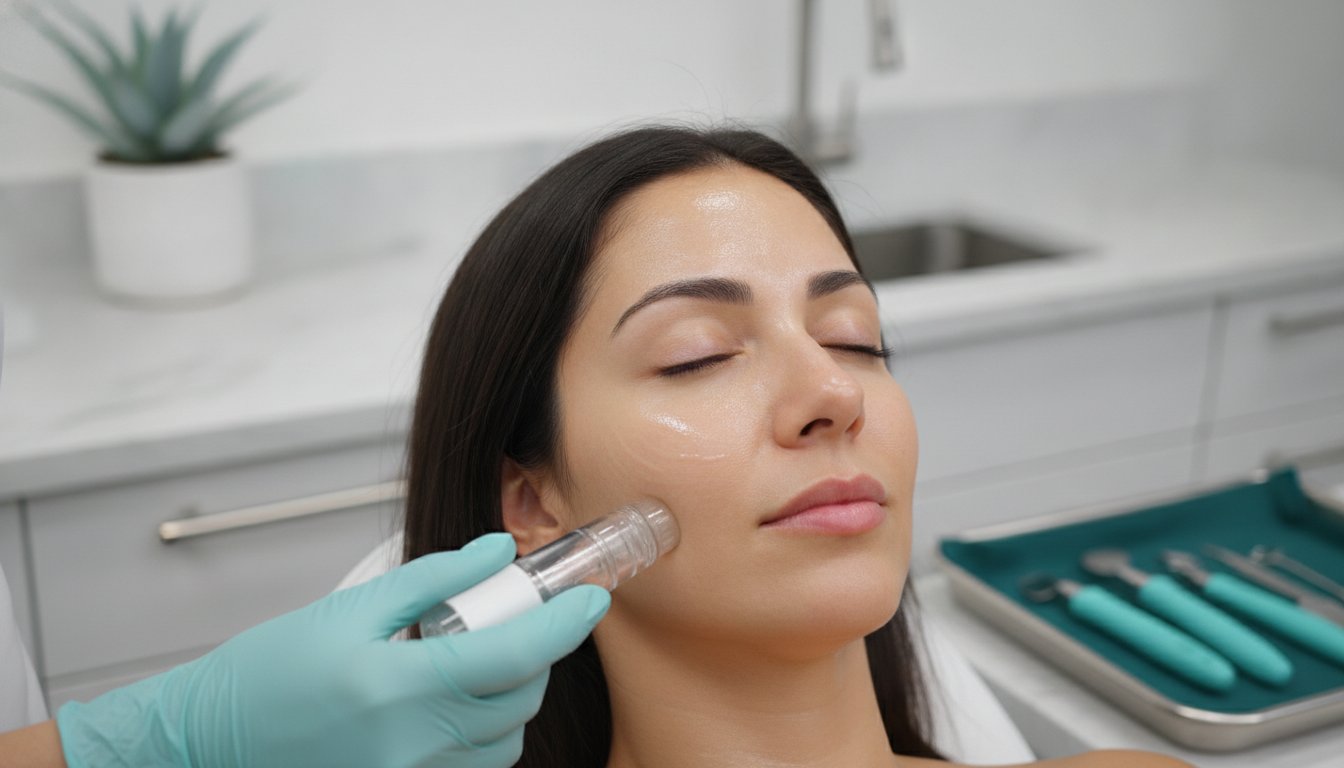
- Step 4: Integrating Skin Health. A beautiful result depends on the quality of the "canvas." We often recommend Microneedling to improve skin texture and elasticity before or alongside volume restoration.
- Step 5: The Long-Term Plan. Consistency is key. We schedule maintenance based on your individual metabolism and tissue health, ensuring you never reach the point of filler fatigue.
If you’re ready to begin your journey with a provider who values craftsmanship, you can schedule your clinical consultation today.
The 'Less is More' Philosophy in Practice
Chasing perfection is the fastest route to looking overfilled. When we try to erase every single line, we risk creating a face that looks static and "uncanny." We strictly adhere to the "two-week rule," which means we wait for the product to fully settle and integrate with your tissues before even considering adding more. This patience ensures that your results look as good in motion as they do in a still photo. Furthermore, customized facials are essential for maintaining the skin's natural luminosity, providing a glow that filler alone simply cannot replicate.
Addressing Specific Areas Without Overdoing It
Natural lip restoration is about hydration and defining the "border" rather than creating excessive projection. We focus on subtle refinement that honors your natural shape. For the jawline, our goal is to create a sharp, elegant frame without adding bulk to the lower face, which can often look heavy if overdone. Temple restoration is another "hidden" key to a lifted look. By subtly restoring volume to the temples, we can provide a natural lift to the brow and cheek area without ever touching the cheeks themselves. This localized, hand-selected approach is the most effective way how to avoid looking overfilled while achieving a truly revitalized look.
Maintaining Your Look: When to Pause, Dissolve, or Pivot
Aesthetic maintenance is a marathon, not a sprint. A physician-led team monitors your progress over years, ensuring the product integrates seamlessly with your natural aging process. This long-term oversight is the most effective way how to avoid looking overfilled as your facial structure naturally changes. Sometimes, the best treatment isn't more filler; it's a strategic pause or a clinical reset. Regular check-ins allow us to evaluate the longevity of your results and ensure that your features remain balanced and authentic.
Hyaluronidase is a specialized enzyme used to dissolve hyaluronic acid fillers that have migrated or integrated poorly. While some media outlets portray dissolving as a drastic measure, we view it as a sophisticated tool for maintaining aesthetic health. If the tissues become saturated or the product begins to mask your natural contours, we might suggest a "filler holiday." This period allows your tissues to rest and reset before we re-evaluate your needs with a fresh perspective.
Pivoting to alternative treatments can often provide the revitalization you seek without adding bulk. We frequently integrate Peptide Therapy to support your body's natural collagen production and cellular repair. This holistic shift focuses on the health of the tissue itself, creating a firmer, more youthful canvas. By prioritizing biostimulation and skin health, we can achieve a lifted, refreshed appearance that requires less injectable intervention over time.
Preventing 'Filler Blindness'
It's common to lose your baseline perception after years of regular injections, a phenomenon known as "filler blindness." You might stop seeing the subtle enhancements and start focusing on perceived flaws that don't actually exist. We use high-resolution "before" photos as an objective record to help you appreciate your natural beauty and track your journey accurately. 512 Aesthetics uses baseline photography as a clinical standard to prevent over-treatment and maintain your unique facial harmony.
Beyond the Syringe: A Holistic Approach to Rejuvenation
A truly refreshed look often involves factors far beyond the syringe. For instance, Medical Weight Management can significantly impact facial volume, often changing your filler requirements as your body composition shifts. Addressing facial laxity during weight loss is a key part of how to avoid looking overfilled, as it ensures we aren't just "chasing" skin sagging with more product. Additionally, professional Teeth Whitening provides a bright, youthful finish that complements your aesthetic results. To start your journey with a team that prioritizes your safety and subtlety, book your natural-looking consultation today.
Redefining Your Aesthetic Standard
Achieving a refreshed appearance is a delicate balance of art and science. True rejuvenation isn't found in the volume of product used, but in the precision of its placement and the preservation of your unique facial expressions. By prioritizing dynamic movement and following a structured, conservative protocol, you can ensure your results remain soft and believable. Understanding how to avoid looking overfilled is ultimately about choosing a partner who values your long-term tissue health as much as your immediate aesthetic goals.
At 512 Aesthetics, we are proud to be a physician-owned and operated practice serving the Austin community with evidence-based care. Our team specializes in creating revitalized outcomes that honor your natural anatomy through a collaborative, boutique experience. We invite you to move beyond industry trends and embrace a personalized plan that celebrates your individuality. Schedule Your Physician-Led Consultation at 512 Aesthetics and discover the confidence that comes with expert, subtle care. You deserve to look as vibrant and well-rested as you feel.
Frequently Asked Questions
How do I know if I have too much filler?
You may notice a loss of natural facial contours or a "flattening" of your features when you look in the mirror. Other signs include a heavy sensation in the lower face or a distortion of your expressions when you laugh or talk. If your face looks significantly different in photos than it did a few years ago, it's likely time for a clinical assessment to evaluate how to avoid looking overfilled in the future.
Can filler migration be fixed without dissolving everything?
Localized dissolving is often a viable option depending on the extent and location of the migrated product. A physician can use small, precise amounts of hyaluronidase to target only the specific area where the filler has moved while leaving the rest of your facial balancing intact. This hand-selected approach allows for subtle refinement without requiring a complete reset of your entire aesthetic journey.
Is it better to get Botox or filler to look younger naturally?
The choice depends on whether you want to address dynamic wrinkles caused by expression or structural volume loss caused by aging. Neurotoxins like Xeomin or Dysport are ideal for smoothing lines in the upper face, while the Restylane collection is better suited for restoring lost support in the midface or jawline. Often, a combination of both treatments provides the most revitalized and balanced result.
How many syringes of filler are considered 'too much' for the face?
There isn't a universal number because the "correct" amount depends entirely on your unique bone structure and degree of volume loss. Some patients achieve a refreshed look with a single syringe, while others require several syringes distributed across different facial compartments for full balancing. A physician-led assessment ensures the focus remains on structural integrity rather than a specific syringe count.
Does filler ever fully go away on its own?
While hyaluronic acid fillers are naturally metabolized by the body, recent clinical observations suggest they can persist in the tissue longer than the six to twelve months typically cited. The duration depends on the product type, injection depth, and your individual metabolism. Because some product remains for several years, we emphasize a steady, intentional treatment pace to prevent the accumulation of excess volume.
What is the 'pillow face' look and how do I avoid it?
"Pillow face" refers to an over-volumized appearance where the midface looks unnaturally puffy, often causing the eyes to appear smaller when you smile. You can avoid this by prioritizing deep structural support against the bone rather than superficial volume. Focusing on the transition between facial compartments ensures your features remain sharp and defined, even during dynamic movement.
Will my skin sag if I stop getting fillers?
Your skin won't sag more than it would have through the natural aging process if you choose to discontinue treatments. Fillers provide temporary support, and as they metabolize, your face will simply return to its baseline state. To maintain skin elasticity during this transition, we often recommend integrating medical-grade treatments like SkinPen Microneedling to support your natural collagen production and skin quality.
How long should I wait between filler appointments?
Most patients find that maintenance appointments every six to twelve months are sufficient to sustain their results. This timeframe allows the product to integrate fully with your tissues before we consider adding more. A consistent, long-term plan is a vital part of learning how to avoid looking overfilled, as it prevents the "stacking" of product that eventually leads to an overdone appearance.