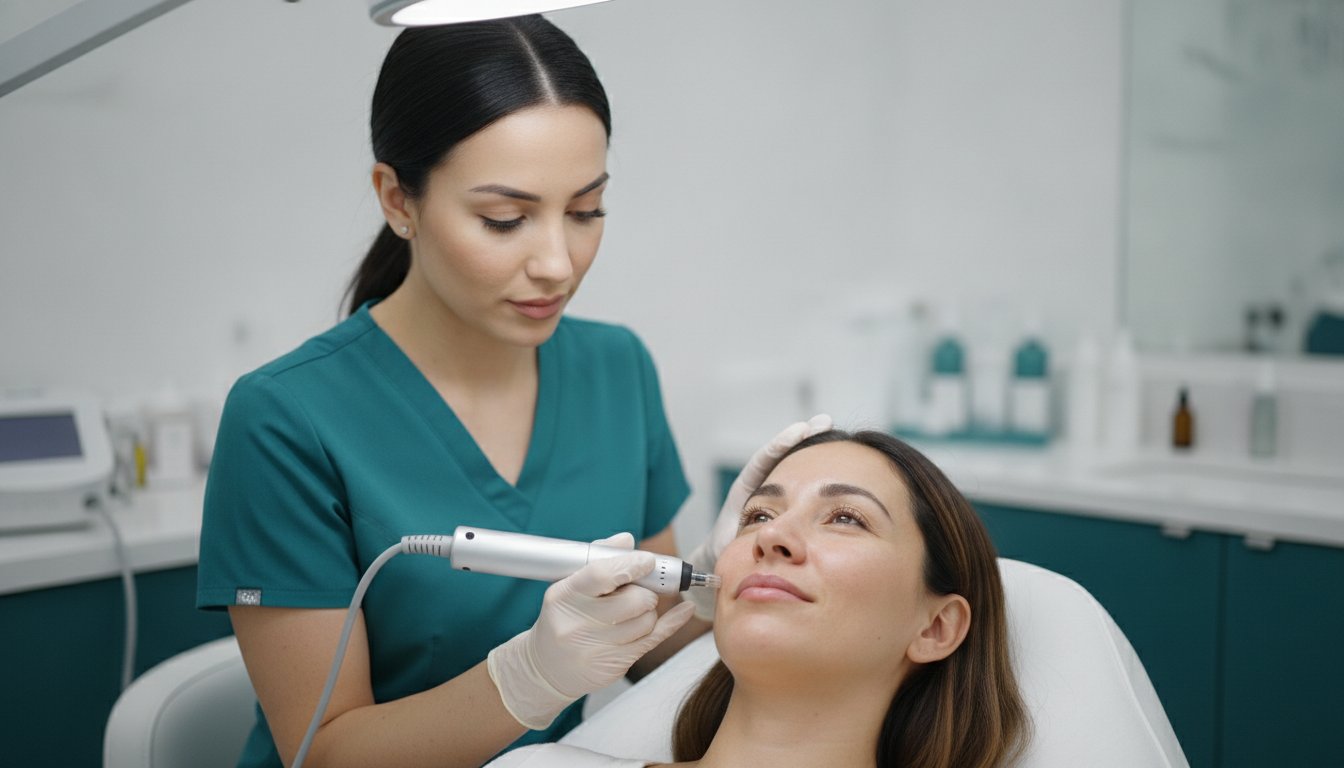
The fastest way to stall your skin's rejuvenation is to treat it too often. While it's tempting to rush toward a smoother complexion, the real magic of collagen induction happens during the quiet intervals of cellular repair. You've likely wondered how often should you get microneedling to see the best results without compromising your skin barrier. In our vibrant Austin community, finding that sweet spot between visible transformation and necessary downtime is essential for maintaining a revitalized, natural look. It's not just about the needles; it's about the sophisticated science of how your skin recovers.
We know you want to maximize your investment and avoid the frustration of over-treating or damaging your delicate skin. This physician-led guide provides the scientifically optimal schedule for 2026, ensuring your SkinPen Microneedling sessions align perfectly with your body’s natural 28-day turnover cycle. You'll gain a clear 12-month roadmap that balances professional expertise with your personal aesthetic goals. We will explore the ideal frequency for specific skin concerns, the latest Texas safety standards, and how to strategically plan your treatments so you never have to miss an important social event due to unexpected redness.
In this physician-led guide, you will discover:
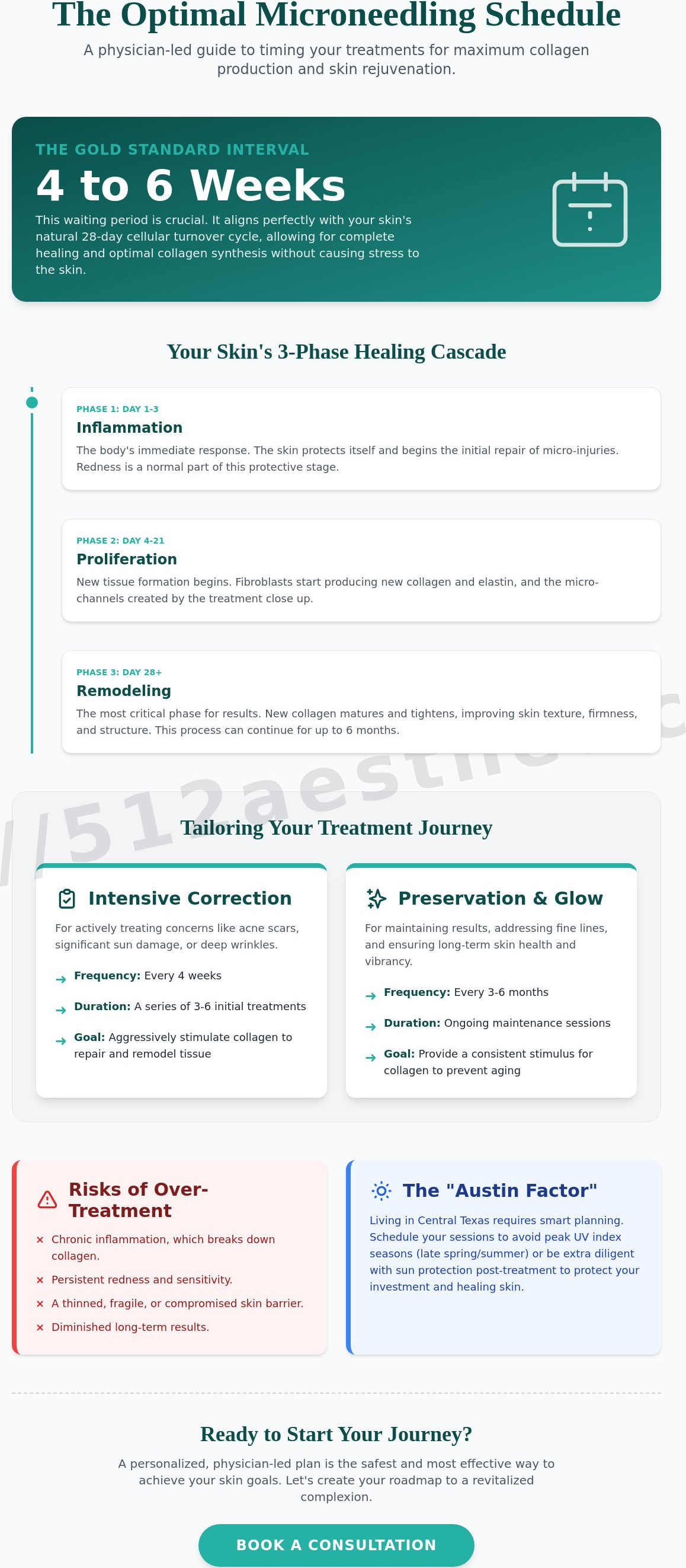
- The biological reasons why a 4 to 6 week interval is the gold standard for respecting your skin’s natural cellular turnover and healing cascade.
- A personalized roadmap explaining how often should you get microneedling based on whether you are in an intensive correction phase or a long-term preservation routine.
- How to navigate the "Austin Factor," including strategic timing to protect your skin from the Central Texas UV index while maintaining a busy social calendar.
- The shift from session frequency to healing quality, focusing on how internal health and professional supervision maximize your collagen production.
The Biological Blueprint: Why 4 to 6 Weeks is the Gold Standard
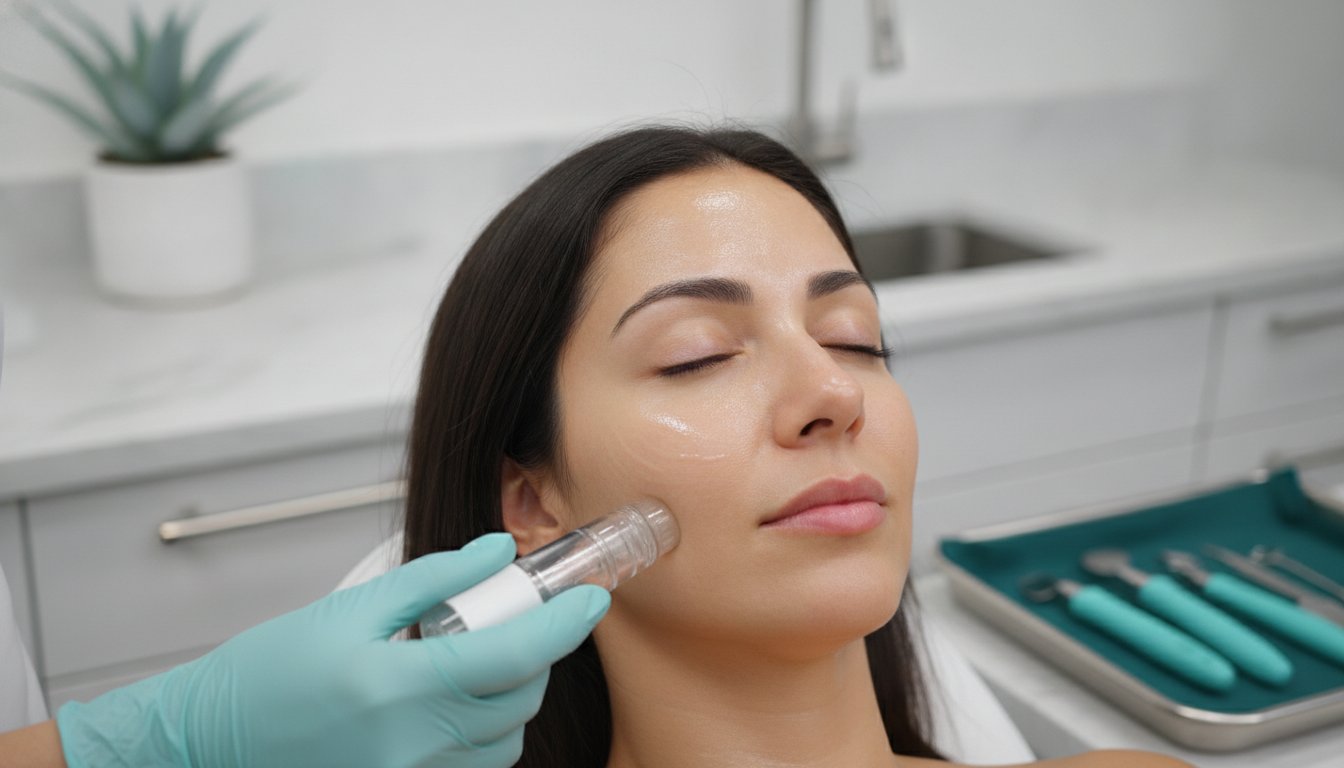
Your skin is a masterpiece of biological engineering, capable of profound self-repair when given the right stimulus and, crucially, the right amount of time. Professional Collagen induction therapy (microneedling) utilizes the SkinPen device to create thousands of controlled micro-injuries in the dermis. These tiny channels trigger a "healing cascade," a sequence of events where the body rushes to repair the perceived damage. This process isn't instant. It relies on a specific biological timeline that cannot be rushed without consequences.
Understanding how often should you get microneedling requires looking at your skin’s cellular turnover cycle, which typically takes a minimum of 28 days for most adults. During this window, specialized cells called fibroblasts are hard at work synthesizing new collagen and elastin fibers. If you intervene with another session before this cycle completes, you interrupt the building process. Waiting 4 to 6 weeks ensures that your skin has moved past the initial trauma and into the productive growth phase, allowing for a revitalized outcome rather than a state of constant stress.
To better understand this biological process, watch this helpful video:
The Three Phases of Dermal Remodeling
Dermal remodeling occurs in three distinct stages after a SkinPen session. First is the inflammatory phase, lasting roughly one to three days, where your skin focuses on protection and initial repair. Next is the proliferation phase, occurring between days 4 and 21, where the micro-channels close and new, healthy tissue begins to form. Finally, the remodeling phase begins around day 28 and can continue for up to six months. This is where collagen matures and tightens, providing the structural lift and texture improvements we aim for in our aesthetic services.
The Risks of Over-Treatment
More isn't always better when it comes to medical-grade skin treatments. Stacking sessions too closely can lead to chronic inflammation, which actually breaks down collagen rather than building it. You might notice persistent redness or a thinning, fragile skin barrier if the tissue isn't allowed to recover. The biological "sweet spot" for your next appointment is the precise moment when the skin has fully recovered from previous micro-trauma, but the internal collagen production is still at its peak.
Tailoring the Timeline: How Your Skin Concerns Dictate Frequency
Every face tells a different story. Determining how often should you get microneedling depends entirely on your unique skin goals and current dermal health. At 512 Aesthetics, our Individualized Assessment Philosophy ensures your treatment plan isn't a carbon copy. We evaluate the depth of your concerns, your skin's resilience, and how your age impacts cellular regeneration. Younger skin often bounces back faster, while mature skin may require slightly longer intervals to ensure the collagen matrix settles effectively without being overwhelmed.
The severity of the condition we are treating acts as the primary compass for our schedule. While a single session can provide a temporary glow, cumulative results require a strategic approach. We look at the skin not just as a surface to be treated, but as a living organ that requires a specific tempo of stimulation and rest to thrive.
Fine Lines and Preventative Rejuvenation
Preservation is the ultimate goal for many of our Austin clients. To address subtle aging and maintain a luminous glow, we typically recommend a series of three sessions spaced 4 to 6 weeks apart. This rhythm keeps the stratum corneum intact while encouraging a steady production of fresh structural proteins. For those seeking a truly revitalized appearance, pairing these sessions with Xeomin or Dysport creates a synergistic effect, smoothing dynamic wrinkles while the SkinPen refines overall texture. It's a balanced approach that fits seamlessly into a busy social calendar.
Deep Acne Scarring and Texture Issues
Correcting structural damage like deep acne scars or significant sun damage requires a more dedicated approach. Because scar tissue and hyperpigmentation are often dense and stubborn, a series of six or more sessions is often necessary to achieve significant dermal remodeling. Consistency is paramount here. Maintaining a strict 4-week interval allows us to "stack" the benefits of each treatment. We use the FDA-cleared SkinPen to precisely stimulate your skin's healing process, ensuring that each micro-channel contributes to a smoother, more even surface over time.
As you progress through your series, we monitor how your tissue responds. Some clients find that their skin's "bounce back" time increases after the fourth session, signaling that it's time to transition from an intensive correction phase to a maintenance-focused schedule. If you're unsure where your skin falls on this spectrum, a personalized consultation can clarify your specific roadmap.
Correction vs. Maintenance: Mapping Your Long-Term Journey
Achieving your dream complexion is a two-part journey: first, we address the damage, and then we protect the progress. When clients ask how often should you get microneedling, they are often surprised to learn that the answer changes as their skin evolves. Think of it like a fitness routine. You might start with intensive daily training to reach a goal, but once you're there, you shift to a sustainable schedule to keep those results. We divide this journey into two distinct stages: the Correction Phase and the Maintenance Phase.
This strategic shift prevents what we call a biological "plateau." After several sessions, your skin reaches a specific baseline of health where aggressive, frequent stimulation is no longer necessary to see results. At this point, spacing out your visits allows the deeper dermal layers to fully mature and strengthen. To support this transition, professional-grade home care is essential. Using curated serums between clinical visits ensures your skin has the raw materials it needs to continue synthesizing collagen long after the needles have left the room.
The Initial Correction Series
The correction phase is where the heavy lifting happens. This stage typically involves a series of 3 to 6 sessions, strictly spaced 4 weeks apart to maximize the "healing cascade" we discussed earlier. This cadence is designed to treat a variety of skin conditions ranging from stubborn acne scars to deep-set sun damage. It's a biological reality that roughly 90% of your visible texture and tone improvement occurs during this intensive correction phase. By maintaining a tight schedule during these initial months, you create a foundation of healthy tissue that will last for years.
The Maintenance Strategy
Once you've reached your aesthetic baseline, your schedule shifts toward preservation. A typical maintenance cadence involves one session every 3 to 6 months. These "seasonal refresh" sessions are perfect for addressing the environmental toll that Austin’s fluctuating humidity and high UV index take on your skin. To make this process effortless, many of our clients utilize the Elite Membership Club to automate their visits and ensure they never miss a preservation window. For an extra boost of radiance between microneedling appointments, we often recommend a HydroDiamond Facial. This pairing keeps the skin hydrated and exfoliated, allowing your microneedling results to remain vibrant and revitalized year-round.
The Austin Factor: Seasonal Timing and Environmental Considerations
Living in Central Texas means embracing an active, outdoor lifestyle, but the high UV index here adds a unique layer of complexity to your skincare schedule. When considering how often should you get microneedling, you must factor in the intense Austin sun. The micro-channels created by the SkinPen remain open and vulnerable shortly after treatment, making your skin significantly more susceptible to environmental damage. For residents in Round Rock, Bee Cave, and Lakeway, this means your treatment frequency might need to shift during the peak of summer to ensure your results remain safe and revitalized.
The "heat-heavy" months of July and August often present the biggest challenge. Intense heat and sweat can irritate healing skin, sometimes requiring longer gaps between sessions to ensure the skin barrier is fully resilient before the next round. While a 4-week interval is the clinical standard, we may extend that to 5 or 6 weeks if you have significant sun exposure planned. Ideally, the best time to start an intensive correction series is during the late fall or winter months when the UV index is lower and indoor recovery is more manageable.
Managing the Texas Sun
The primary concern with sun exposure post-treatment is Post-Inflammatory Hyperpigmentation (PIH). Because those micro-channels are open, UV rays can penetrate deeper, potentially causing dark spots instead of the clear, even tone we're aiming for. We follow a strict rule of thumb: no direct sun for at least 72 hours after your session. If you have a lake day or an outdoor brunch scheduled, it's better to delay your appointment by a few days. During the first 48 hours, we recommend relying on physical barriers like wide-brimmed hats and shade rather than chemical sunscreens, which can sometimes irritate the freshly treated dermal layer.
Timing Around Austin Events
Austin’s social calendar is packed with iconic events like SXSW and ACL, and we want you to look your best for all of them. We utilize the "14-Day Rule" for all major events. This means you should finish your microneedling session at least two weeks before your event. This window allows the initial redness to subside and the "proliferation phase" to begin, giving your skin that signature healthy glow just in time for the festivities. Our physician-led team works closely with you to adjust your 12-month roadmap through our treatment series and bundles, ensuring your sessions never interfere with your summer lake trips or festival plans.
If you're ready to map out your seasonal skin strategy, schedule your Austin skin assessment today.
Beyond the Calendar: Maximizing Each Session at 512 Aesthetics
True transformation isn't just about the date on your calendar. While understanding how often should you get microneedling is the first step toward a smoother complexion, the ultimate quality of your results depends on how well your body synthesizes new collagen between those visits. We focus on the biological environment as much as the mechanical treatment. By optimizing your skin’s internal health, we ensure that every micro-channel created by the SkinPen Microneedling device translates into visible, revitalized tissue.
Our approach at 512 Aesthetics prioritizes subtle, natural-looking rejuvenation that honors your unique features. We don't believe in a one-size-fits-all frequency because your skin's resilience can fluctuate based on stress, sleep, and seasonal changes. By shifting the conversation from "how often" to "how well" your skin recovers, we help you achieve a level of radiance that lasts far beyond your initial series of appointments.
The Wellness Connection
Internal health is the fuel for your external glow. To accelerate the body’s natural repair mechanisms, many of our clients integrate Peptide Therapy into their skincare journey. These targeted amino acid chains signal your cells to increase repair speed and efficiency, making each session more impactful. Under the guidance of Dr. Saima Jehangir, we look at the big picture of your health. Proper hydration and medical-grade nutrition provide the essential building blocks for dermal remodeling. Without these internal supports, even the most frequent treatments will hit a biological ceiling. A holistic assessment ensures your body is primed to respond to every micro-injury with robust, healthy collagen production.
Your Personalized Aesthetic Plan
Choosing a physician-owned practice means your skin is monitored with a high level of clinical expertise. We don't just count the weeks between your appointments; we look for real-time data in your skin’s texture, tone, and "bounce back" time. If your skin is healing faster than expected, we can maintain your momentum. If you need a little more time to recover from the Austin heat, we adjust your schedule accordingly. This collaborative partnership ensures your safety while maximizing your aesthetic outcome. You aren't just another appointment in a book. You're a unique individual deserving of a hand-selected, evidence-based plan.
To learn more about how physician-led practices like Couture Dermatology & Laser Beverly Hills maintain high clinical standards, you can explore their specialized approach to medical and cosmetic dermatology.
Ready to discover your skin's true potential? Book your consultation to find your perfect frequency.
Your Personalized Path to Lasting Rejuvenation
Mastering the timing of your treatments is the difference between a temporary glow and a total skin transformation. We've explored how the 4 to 6 week interval respects your body's natural cellular turnover, and why your specific concerns, from stubborn acne scarring to subtle fine lines, dictate a unique tempo. By understanding how often should you get microneedling, you can move confidently from an intensive correction phase into a sustainable maintenance routine that honors your skin's long-term health.
At 512 Aesthetics, we don't believe in guesswork or one-size-fits-all schedules. Our physician-led approach, guided by Dr. Saima Jehangir, combines the precision of FDA-cleared SkinPen® technology with a deep understanding of your skin's internal wellness. We build personalized treatment plans that account for everything from the Central Texas UV index to your busy social calendar. It's about empowering you to achieve revitalized, natural-looking outcomes through a partnership rooted in safety and expert care. Your journey to a smoother, more radiant complexion is a collaborative process designed just for you.
Frequently Asked Questions
Can I get microneedling every 2 weeks if I want faster results?
No, you shouldn't get microneedling every 2 weeks because your skin needs time to complete its natural healing cascade. Rushing the process interrupts the proliferation phase where new tissue forms. We recommend waiting at least 4 weeks to ensure you are building healthy collagen rather than inducing chronic inflammation. Pushing the timeline won't give you faster results; it will likely compromise your skin barrier and lead to persistent redness.
How many microneedling sessions are needed for deep acne scars?
Deep acne scars typically require a series of 6 or more sessions to achieve significant dermal remodeling. Because scar tissue is dense and stubborn, we need multiple treatments to break down old fibers and encourage the growth of new, organized collagen. When determining how often should you get microneedling for scarring, a strict 4-week interval is usually the most effective cadence for cumulative progress.
Is it normal for my skin to still feel dry 3 weeks after treatment?
While the initial peeling usually subsides within a week, it is normal for your skin to feel slightly drier for up to 3 weeks as it undergoes internal remodeling. Your skin is working hard to produce new structural proteins, which can temporarily deplete surface moisture. We recommend using medical-grade hydrators and maintaining high water intake during this window to support the revitalized texture we're aiming for.
How long do the results of a microneedling series actually last?
The structural improvements from a microneedling series can last for several months or even up to a year. However, because your skin continues to age and face environmental stressors like the Austin sun, maintenance is necessary. Most clients transition to a preservation schedule with one session every 3 to 6 months after their initial correction series is complete to keep their results vibrant and healthy.
Should I wait longer between sessions if I have sensitive skin?
Yes, we often extend the waiting period to 6 weeks for clients with sensitive skin or a compromised barrier. It's essential that your skin is fully recovered and no longer reactive before we introduce a new round of micro-injuries. Our physician-led team monitors your "bounce back" time closely to ensure your schedule is personalized to your skin's specific resilience levels and recovery speed.
Can I get a facial or chemical peel between my microneedling appointments?
You can certainly incorporate other treatments, but timing is critical. We often suggest a HydroDiamond Facial or dermaplaning two weeks after your microneedling session to clear away lingering debris and boost hydration. However, you should avoid aggressive chemical peels or laser treatments within the same 4-week window to prevent over-stimulating the tissue and causing unnecessary irritation or pigment issues.
Will getting microneedling too often cause permanent skin damage?
Yes, over-treating the skin can lead to permanent thinning and a chronically inflamed barrier. If you don't allow the remodeling phase to finish, you risk breaking down collagen rather than building it. This is why the question of how often should you get microneedling is so important. A physician-led schedule ensures you stay in the "sweet spot" of rejuvenation without crossing into dermal damage.
How soon after a session can I resume my Retinol or Vitamin C routine?
You should typically wait 5 to 7 days before resuming active ingredients like Retinol or Vitamin C. These powerful topicals are excellent for long-term health, but they can be too aggressive for skin that is still in the early stages of repair. Once all visible redness and peeling have subsided, you can safely reintroduce your medical-grade routine to enhance and protect your clinical results.