What if the secret to erasing years of Texas sun damage isn't found in a luxury brightening serum, but in a precisely calibrated clinical treatment? If you've spent months layering heavy foundation to mask melasma or stubborn sunspots, you already know that over-the-counter solutions often fall short of their promises. It's frustrating to invest time and money into products that barely scratch the surface of your concerns. Seeking a professional chemical peel for hyperpigmentation in Austin offers a more sophisticated path to clarity, provided it's handled with the right level of medical expertise.
We understand that the word "chemical" can feel intimidating, especially if you're worried about downtime or skin sensitivity. You deserve a restorative experience that prioritizes your skin's health while delivering visible, revitalized results. This guide will walk you through the safety and science of medical-grade treatments performed under expert physician oversight. We'll clarify the differences between superficial and medium-depth peels, explain the legal importance of medical supervision in Texas, and show how a curated, evidence-based plan can help you achieve a luminous, even complexion that feels as good as it looks.
Key Takeaways
- Learn why the intense Central Texas UV index necessitates a clinical approach to pigment management that goes beyond the capabilities of standard facials.
- Understand the science of cellular turnover and how medical-grade acids interrupt the enzyme production responsible for stubborn dark spots.
- Discover the importance of a personalized chemical peel for hyperpigmentation Austin tailored to your specific Fitzpatrick skin type and aesthetic goals.
- Identify the essential "Pre-Peel" protocol and recovery steps necessary to "quiet" the skin and maintain a healthy barrier throughout the resurfacing process.
- Gain confidence in the safety of physician-led treatments that prioritize subtle, revitalized results over aggressive, over-processed outcomes.
The Austin Sun and Hyperpigmentation: Why Standard Facials Often Fall Short
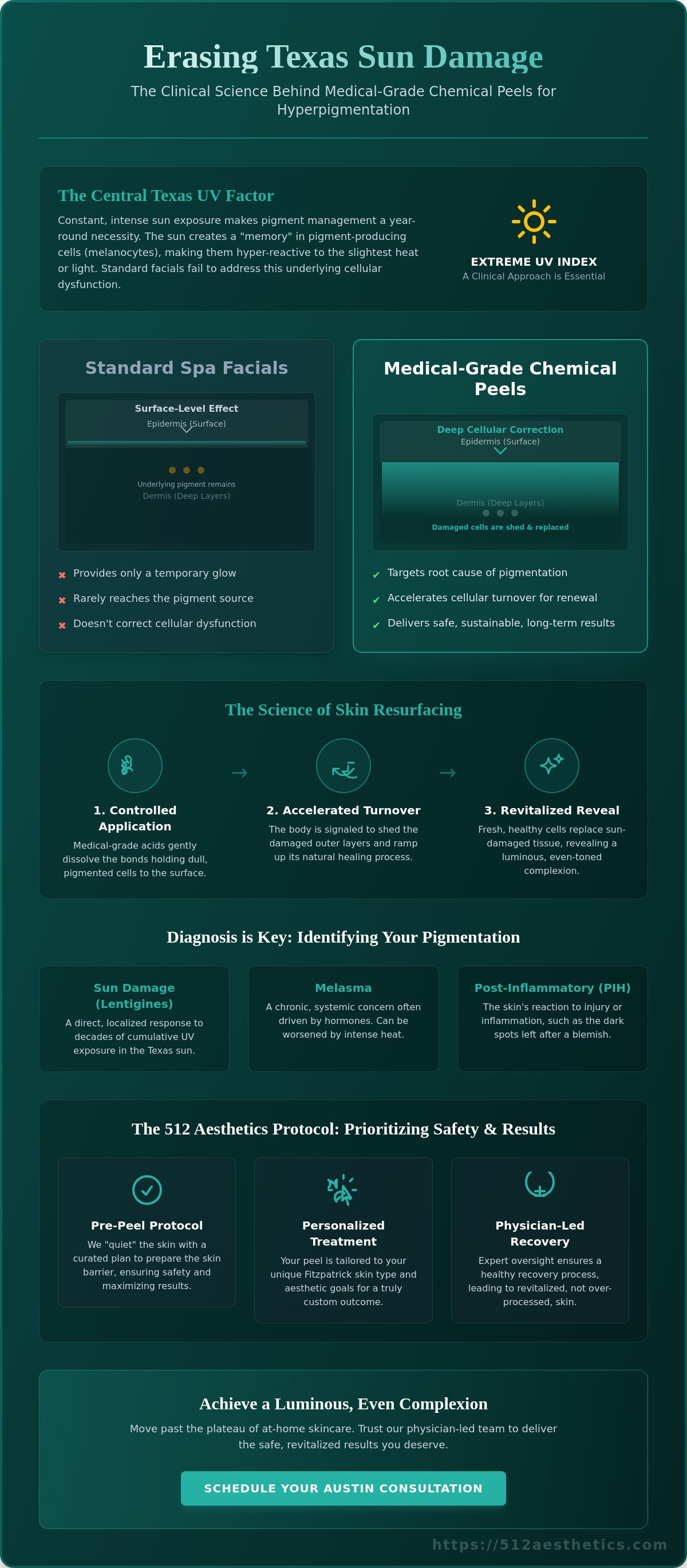
Living in Central Texas means embracing a lifestyle defined by the outdoors, but our skin often pays a silent price for those afternoons at Lady Bird Lake. Hyperpigmentation occurs when specialized cells called melanocytes overproduce melanin, the pigment that gives skin its color. This overproduction can be triggered by UV radiation, hormonal shifts, or even the inflammation left behind after a blemish. While a standard facial provides a delightful temporary glow, it rarely reaches the deeper layers where this pigment is manufactured.
To better understand the risks of aggressive treatments and why expert guidance is essential, watch this helpful video:
In Austin, the UV index frequently reaches extreme levels, making pigment management a year-round commitment rather than a seasonal luxury. This constant exposure differentiates simple sun spots, known as lentigines, from more complex conditions like melasma or post-inflammatory hyperpigmentation (PIH). While sun spots are localized responses to light, PIH is the skin's reaction to injury, and melasma is a chronic, systemic concern. The Science of Resurfacing through a medical-grade chemical peel for hyperpigmentation Austin residents seek allows for a controlled exfoliation that standard buff and shine treatments simply cannot match.
The Central Texas UV Factor
Chronic sun exposure does more than just darken the surface; it creates a "memory" within your pigment-producing cells. These cells become hyper-reactive, firing off melanin at the slightest hint of heat or light. Superficial spa treatments might brighten the skin for a few days, but they don't address the underlying cellular dysfunction. This is why a physician-led approach is the gold standard for a chemical peel for hyperpigmentation Austin clients rely on. It shifts the focus from temporary aesthetics to long-term skin health, ensuring that pigment correction is both safe and sustainable.
Melasma vs. Sun Damage: Why Diagnosis Matters
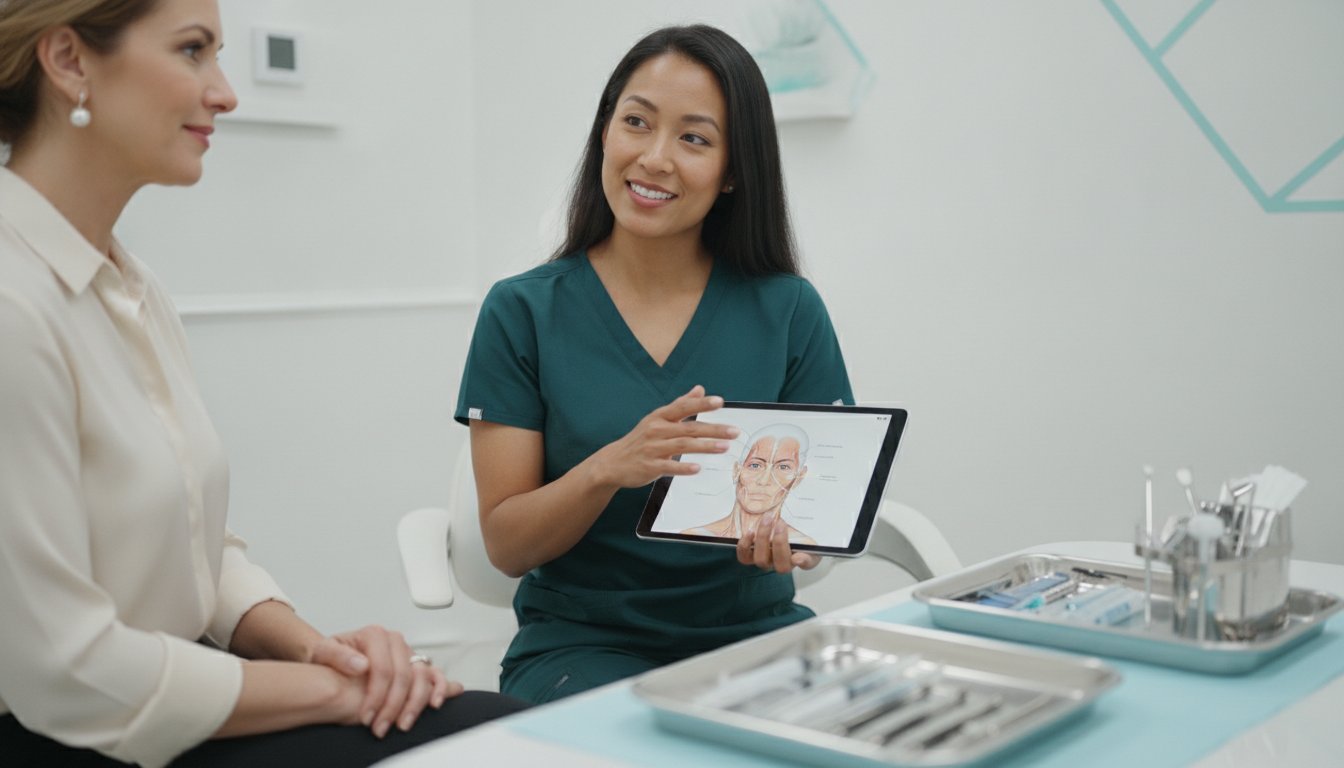
Identifying the root cause of your dark spots is the first step toward a clear complexion. Melasma is notoriously fickle; it's often driven by hormonal changes and can actually worsen if exposed to the intense heat used in some laser treatments. Sun damage, on the other hand, is a cumulative record of decades spent in the Texas heat. Because these conditions require different acid blends and depths, a professional assessment is non-negotiable. At 512 Aesthetics, we prioritize this individualized diagnostic phase to ensure your treatment plan is as unique as your skin's history.
The Science of Resurfacing: How Chemical Peels Erase Dark Spots
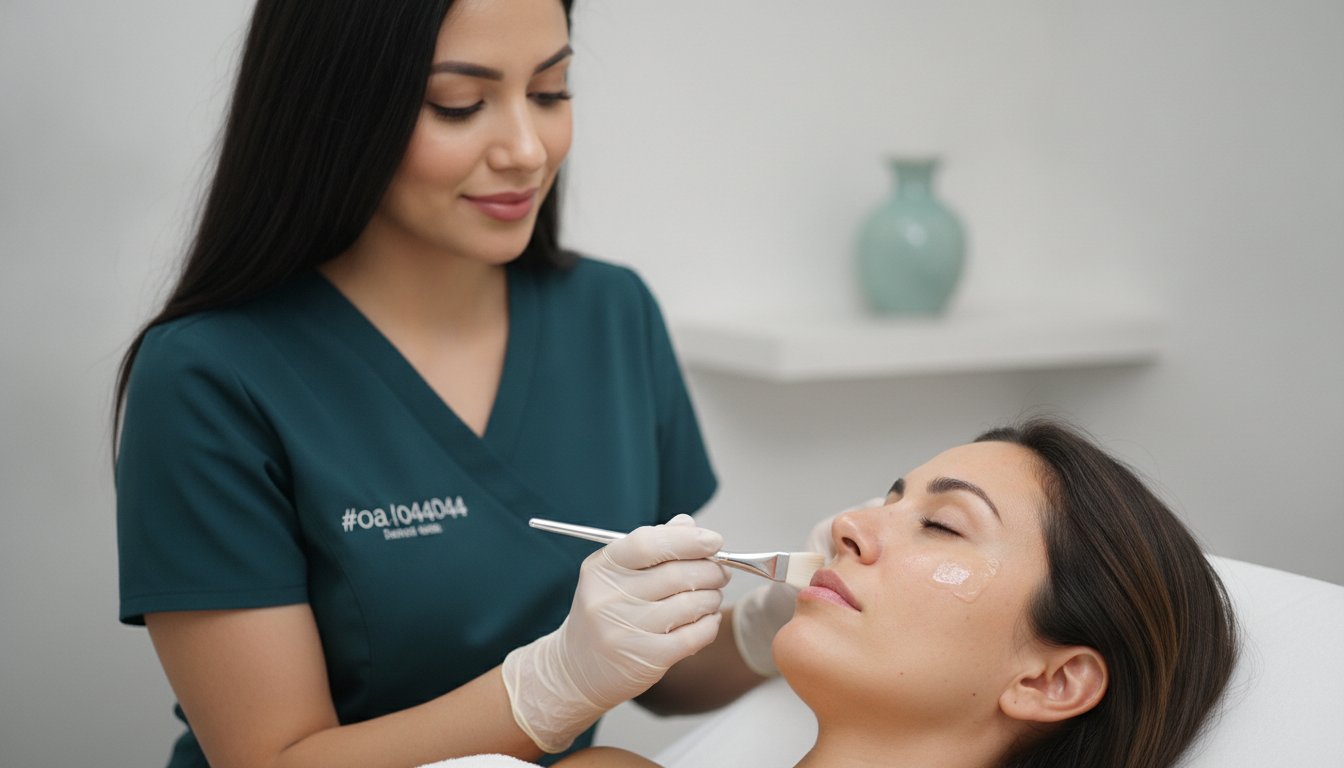
True skin transformation begins when we look beyond the surface level to the biological mechanics of repair. A medical-grade chemical peel works by inducing a state of controlled injury; this process signals your body to accelerate its natural cellular turnover. By gently dissolving the bonds between dull, pigmented cells, the treatment forces the skin to shed its damaged outer layers. This reveal is more than just an exfoliation. It is a systematic replacement of sun-damaged tissue with fresh, revitalized cells that haven't yet been compromised by the environment. When seeking a chemical peel for hyperpigmentation Austin residents often find that this deep cellular correction is the only way to move past the plateau of at-home skincare.
The depth of this "injury" is what determines the final result. Superficial peels target the epidermis to brighten the complexion, while medium-depth peels reach the papillary dermis to address more stubborn, ingrained pigment. Understanding the nuances of Preparing and Recovering is essential for these deeper treatments, as they require a more intentional approach to healing. By removing the old, pigmented cells, we create a clean slate that allows your skin to reflect light more evenly, reducing your reliance on heavy foundations and concealers.
Cellular Turnover and Melanin Inhibition
Tyrosinase inhibition is the essential "off switch" that prevents your skin from producing excess melanin in response to triggers like heat or UV light. While the peel removes existing dark spots, the specific acids in the formula work to quiet the enzymes responsible for future discoloration. This dual-action approach is why physician-led treatments are so effective for long-term management. These results are often enhanced when combined with other collagen-inducing therapies, such as microneedling for skin rejuvenation, which further refines the skin's texture and tone.
The Medical-Grade Advantage
The primary difference between a boutique clinical treatment and an at-home kit lies in the pH level and acid concentration. Professional formulas typically have a much lower pH, often ranging between 1.0 and 2.5, which allows them to penetrate the skin barrier effectively. At-home solutions are restricted to higher pH levels, usually 3.5 or above, to prevent accidental injury; however, this also limits their ability to reach the deeper pigment. Physician-monitored applications ensure that these high-potency acids are used safely, providing predictable and dramatic results without the guesswork. If you're ready to see what professional-grade care can do for your complexion, exploring our available aesthetic services is an excellent place to start.
Choosing the Right Peel for Your Pigmentation Concerns
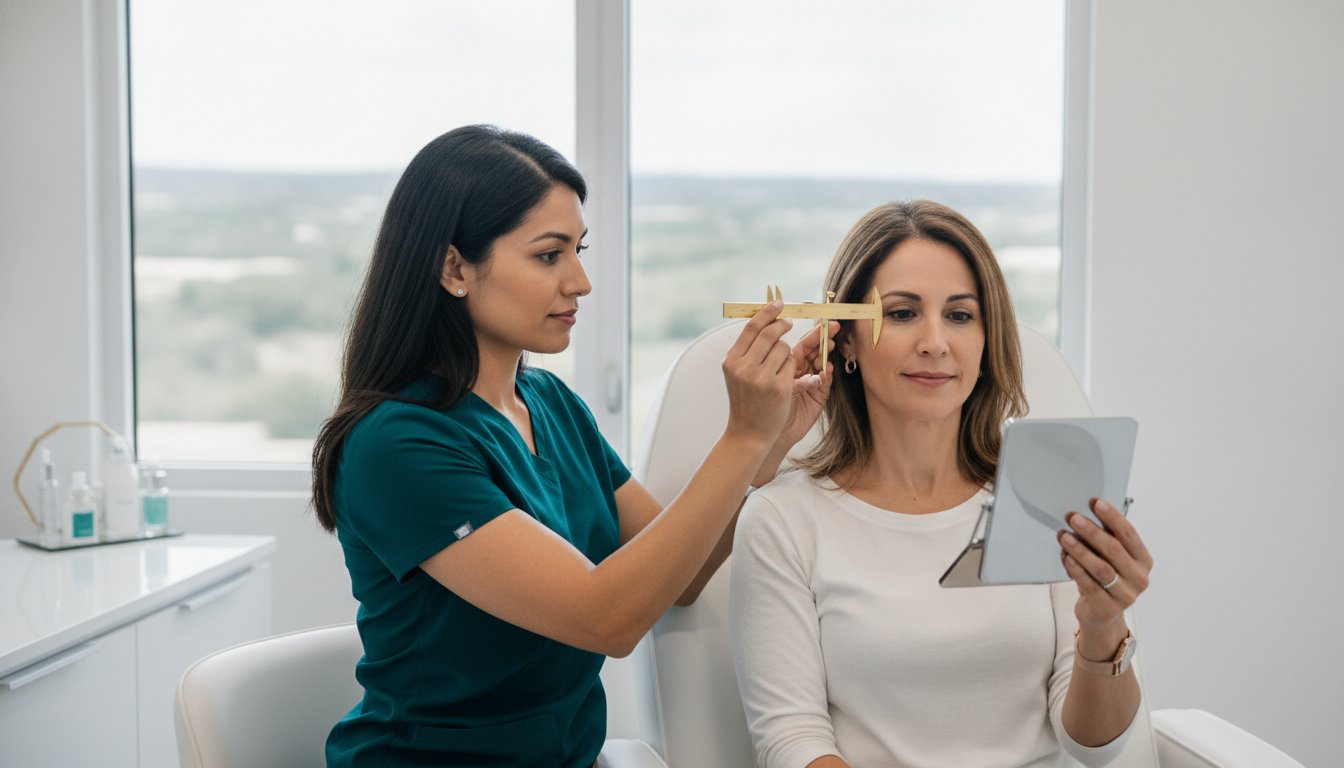
Achieving a luminous, even skin tone starts with understanding your specific skin profile rather than simply picking a popular treatment off a menu. Because every complexion reacts differently to active ingredients, we utilize the Fitzpatrick scale to assess how your skin responds to UV light and heat. This framework is essential for safety; for example, deeper skin tones require a more cautious approach to avoid triggering rebound pigment. Choosing the Right Peel for Your Pigmentation Concerns involves matching the specific molecular weight of an acid to the depth of your discoloration.
Alpha Hydroxy Acids (AHAs), such as Glycolic and Lactic acid, are excellent for surface-level brightening and addressing mild "photo-aging" from the Texas sun. Glycolic acid has the smallest molecular size, allowing it to penetrate quickly and effectively dissolve the glue holding dead cells together. For those dealing with post-acne hyperpigmentation (PIH), Salicylic acid is often the preferred choice. As a oil-soluble Beta Hydroxy Acid (BHA), it dives into the pores to clear congestion while simultaneously calming the inflammation that leads to dark spots. Selecting a chemical peel for hyperpigmentation Austin residents can trust means finding this balance between correction and comfort.
Peels for Melasma and Sensitive Skin
Melasma requires a "slow and steady" philosophy because aggressive heat or harsh acids can actually worsen the condition. We often recommend Lactic or Mandelic acids for these sensitive cases. Lactic acid is naturally hydrating, while Mandelic acid has a larger molecular structure that enters the skin slowly, significantly reducing the risk of irritation. Starting with personalized facial treatments allows us to "quiet" the skin and build tolerance before moving toward more intensive corrective steps.
Correcting Deep Sun Damage
For Austin locals with significant sun damage or "leathery" texture, Trichloroacetic Acid (TCA) remains the gold standard for deep resurfacing. These medium-depth peels are highly effective at erasing years of UV exposure in a single session. You should expect a transformative peeling process that typically lasts 5 to 7 days as the old, damaged tissue makes way for a revitalized layer. Integrating these corrective formulas into a broader aesthetic service plan ensures that your results aren't just dramatic, but also maintained through professional guidance. When you're ready for a high-impact chemical peel for hyperpigmentation Austin, a physician-led TCA protocol offers the most predictable path to clarity.
Preparing and Recovering: The 512 Aesthetics Protocol for Safe Results
Success with a chemical peel for hyperpigmentation Austin is often determined long before the first drop of acid touches your skin. We view the treatment as a collaborative journey that begins with "quieting" your melanocytes. By using pigment suppressors in the weeks leading up to your appointment, we ensure your skin is stable and less likely to overreact to the clinical stimulus. This proactive approach minimizes the risk of post-inflammatory hyperpigmentation, a common concern for those with active, sun-exposed lifestyles in Central Texas.
Pre-Conditioning Your Skin
Dedicating 2 to 4 weeks to skin preparation is the most effective way to guarantee a safe outcome. This phase typically involves using medical-grade topicals through our Circadia partnership, which provides the necessary tyrosinase inhibitors to regulate melanin production. For clients with higher Fitzpatrick skin types, a physician-led assessment is essential to determine the specific pre-conditioning timeline required. This individualized care ensures that your skin is resilient enough to handle corrective depths without the risk of rebound darkening.
Once the treatment is complete, the first 72 hours are critical for maintaining the integrity of your skin barrier. Your focus should shift entirely to cleansing with gentle, non-stripping formulas, hydrating deeply, and providing absolute protection from environmental stressors. You should pause your Vitamin C serums and Retinols for approximately 7 to 10 days, or until your skin has completely finished its renewal process. Resuming these actives too early can cause unnecessary irritation and delay the healing that brings about your new, luminous glow.
The Austin Post-Peel Survival Guide
Visible peeling is a common side effect of the renewal process, but it isn't the primary goal of the treatment. In our local climate, managing heat and UV exposure is the greatest challenge during recovery. You must avoid intense workouts, steam rooms, and direct Austin sun for at least the first week. Sweat can trap heat under the skin, leading to blistering or uneven healing. Many of our clients find that joining the Elite Membership Club helps them stay on track with regular maintenance and professional guidance throughout the year.
Broad-spectrum sun protection is the single most important rule in your recovery protocol. In a city where the UV index frequently hits double digits, even a short walk to your car can compromise your results. Applying a physical block with at least 30 SPF every two hours is non-negotiable. If you're ready to start your journey toward a clearer complexion with a customized chemical peel for hyperpigmentation Austin, we invite you to schedule your clinical consultation today.
Why Physician-Led Chemical Peels in Austin Make the Difference
Choosing a provider for a chemical peel for hyperpigmentation Austin is as much about safety as it is about aesthetics. Under the expert guidance of Dr. Saima Jehangir, 512 Aesthetics operates with a steadfast commitment to evidence-based medical standards. This physician-led oversight isn't just a legal requirement for deeper resurfacing; it's the foundation of our clinical credibility. It ensures that every protocol is rooted in science, prioritizing the long-term health of your skin barrier over quick, aggressive fixes that might lead to complications. You aren't just receiving a service; you're participating in a medically supervised transformation.
Our core philosophy centers on a "Subtle and Revitalized" outcome. In an industry that often leans toward over-processed or exaggerated results, we believe in enhancing your natural features rather than replacing them. We focus on craftsmanship and high-end customization, ensuring that your skin looks refreshed and luminous rather than stripped or vulnerable. This refined approach allows you to step back into your daily life with newfound confidence, knowing your treatment was hand-selected for your specific goals and personal aesthetic objectives.
A Boutique Approach to Skin Health
Unlike high-volume corporate med spas that often apply a "one-size-fits-all" formula, we view skin health as a collaborative partnership. We understand that a resident of Lakeway might have different environmental exposures than someone living in the heart of Austin or nearby Buda. We tailor every peel concentration and acid blend to your individual lifestyle and skin type. This level of personalization ensures that your treatment is effective without being overwhelming. If you're looking for a comprehensive plan to manage pigment over time, our treatment series and bundles offer a structured way to achieve and maintain your desired results.
Start Your Transformation in Austin
Your journey from managing stubborn pigment to enjoying a lasting, healthy glow is a process we're honored to guide. By combining clinical authority with boutique warmth, we've created an environment where you can feel both safe and pampered. Whether you're coming from South Austin or the surrounding hill country, our location is designed to be a sanctuary for those seeking sophisticated skin correction. We invite you to explore our full range of aesthetic services and discover how a physician-led chemical peel for hyperpigmentation Austin can transform your complexion. Take the first step toward your personal aesthetic objectives by connecting with us for a professional consultation today.
Your Path to a Clearer, More Confident Complexion
Reclaiming your skin's natural radiance is a journey that requires both scientific precision and a personalized touch. By moving beyond temporary surface fixes and embracing a chemical peel for hyperpigmentation Austin, you're choosing a path that prioritizes long-term health and visible clarity. We've explored how understanding your unique Fitzpatrick profile and preparing with medical-grade Circadia skincare can fundamentally transform the way your skin responds to the intense Central Texas environment. This evidence-based approach ensures that your results are as safe as they are transformative.
At 512 Aesthetics, Dr. Saima Jehangir leads our team with a focus on subtle, revitalized outcomes that enhance your inherent beauty rather than masking it. We don't believe in over-processed results; instead, we offer a boutique experience where clinical expertise meets artisanal care. It's time to stop hiding behind foundation and start enjoying the luminous skin you deserve. We invite you to Schedule Your Personalized Chemical Peel Consultation at 512 Aesthetics and begin your partnership with a team dedicated to your aesthetic well-being. You deserve a complexion that feels as vibrant and resilient as the city we call home.
Frequently Asked Questions
How many chemical peels will I need to see results for my hyperpigmentation?
Most clients notice an initial brightening of their complexion after just one session, but a series of three to six treatments is typically required for significant pigment correction. For superficial peels, a series of six treatments spaced four weeks apart is standard. Medium-depth peels often achieve the desired results in a shorter series of three sessions, depending on the stubbornness of the sun damage.
Is a chemical peel for hyperpigmentation safe for dark skin tones?
Yes, chemical peels are safe and highly effective for dark skin tones when managed through a specialized, physician-led protocol. We prioritize "barrier-first" brightening by using larger-molecule acids like Mandelic or Lactic acid that enter the skin slowly. This careful approach, combined with a mandatory pre-conditioning phase, prevents the irritation that can lead to post-inflammatory hyperpigmentation in deeper complexions.
What is the downtime for a medical-grade chemical peel?
Downtime varies from zero to seven days depending entirely on the depth of the treatment. Superficial "glow" peels may only result in minor redness for a few hours, allowing you to return to your routine immediately. More intensive medium-depth peels involve a physical shedding process that typically peaks between days three and five, concluding fully by the end of the first week.
Can I get a chemical peel in the summer in Austin?
You can receive a chemical peel for hyperpigmentation Austin during the summer months, provided you are committed to strict sun avoidance and indoor recovery. Because our local UV index is exceptionally high, many clients find it more convenient to schedule deeper corrective treatments during the fall or winter. This timing reduces the stress of managing sun exposure during the critical healing window.
Will a chemical peel help with my melasma?
Yes, specific chemical peels are excellent for managing melasma by inhibiting tyrosinase, the enzyme responsible for melanin production. Unlike some heat-based lasers that can accidentally trigger hormonal pigment to darken, a calibrated peel uses chemical exfoliation to lift existing spots while "quieting" the pigment-producing cells. This results in a more even, revitalized skin tone without the risk of heat-induced flare-ups.
What is the difference between a spa peel and a physician-led medical peel?
The primary difference lies in the pH level and the concentration of the active acids. In Texas, licensed estheticians are restricted to superficial peels that only affect the outermost layer of the epidermis. A physician-led medical peel can utilize much lower pH levels and higher concentrations to reach the deeper dermis, where the most stubborn hyperpigmentation and sun damage reside.
Do chemical peels hurt?
Most patients describe the sensation as a warm, tingling, or "spicy" feeling rather than actual pain. Superficial treatments are generally very comfortable and require no recovery time. For deeper corrective peels, we utilize various cooling techniques to ensure the sensation remains manageable. The feeling usually subsides within minutes of the neutralizing agent or finishing products being applied to the skin.
How should I prepare my skin for a chemical peel?
You should prepare by using a medical-grade pigment suppressor for two to four weeks prior to your chemical peel for hyperpigmentation Austin. This pre-conditioning phase stabilizes your melanocytes and ensures a more uniform penetration of the peel. You'll also need to pause the use of retinoids, AHAs, and BHAs for approximately three to five days before your clinical appointment to avoid over-sensitizing the skin.