What if the key to reversing years of Texas sun exposure isn't a thicker foundation, but a more precise approach to cellular renewal? Most of us have reached a point where stubborn hyperpigmentation and rough texture simply won't budge, no matter how many luxury serums we apply. You want to look like yourself, just more rested and clear, without the overdone look that often comes with aggressive treatments. Finding the best chemical peel for sun damage requires moving past the confusion of superficial spa-grade options and into the realm of medical-grade, physician-led care.
We understand that your skin's history is unique, and a one-size-fits-all peel often fails to reach the solar depth where damage truly lives. This guide will help you discover which medical-grade chemical peels effectively erase sun spots and fine lines while ensuring safe, revitalized results tailored to your specific needs. We will explore the science behind various acid depths, the importance of clinical supervision under Texas medical regulations, and what a personalized treatment plan looks like for achieving significant improvement in visible hyperpigmentation. By the end of this article, you will have a clear roadmap for restoring a smooth, even complexion through a partnership of art and clinical expertise.
Key Takeaways
- Learn to identify the structural signs of photoaging, from fine rhytids to stubborn age spots, and why standard serums often fall short of reaching the deeper layers of damage.
- Compare medical-grade acids like AHA and TCA to determine the best chemical peel for sun damage based on your specific skin type and the depth of your pigmentation.
- Understand the critical importance of physician-led neutralization to prevent irritation and ensure a safe, predictable recovery process that protects your skin's health.
- Discover why the "Peel Season" in Central Texas runs from October to April and how to prepare your skin for optimal results during these cooler months.
- Explore how a personalized assessment can combine peels with other clinical treatments to achieve a revitalized, balanced look that enhances your natural features without looking overdone.
Understanding Sun Damage: Is a Chemical Peel Right for Your Skin?
Living in a sun-drenched climate often leaves a visible legacy on our skin that a simple daily moisturizer can't fix. Finding the best chemical peel for sun damage begins with understanding that your skin's surface is a map of its history. This transformation is known as photoaging, which refers to the structural breakdown of collagen and elastin fibers caused by repeated UV radiation. Photoaging is the cumulative DNA damage in skin cells caused by chronic sun exposure. While surface freckles might seem like minor imperfections, they often signal deeper changes, such as solar lentigines, commonly known as age spots, or actinic keratosis, which are rough, scaly patches. You might also notice fine rhytids, or wrinkles, beginning to form in areas where the skin has lost its natural resilience. Unlike physical scrubs that only polish the very top layer of dead cells, medical-grade treatments reach the internal layers where these issues originate. For a foundational Chemical peel overview, it's helpful to understand how different acids interact with these damaged layers to stimulate fresh growth.
To better understand this concept, watch this helpful video:
The Three Grades of Sun Damage
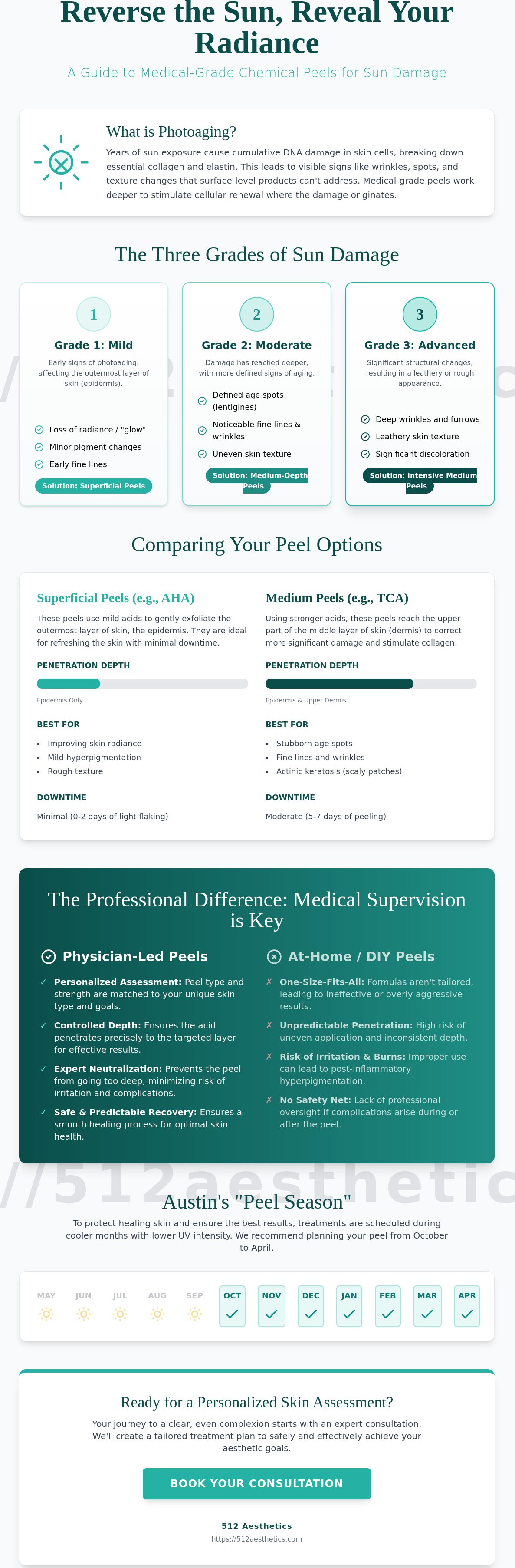
To find the best chemical peel for sun damage, we first categorize the extent of the UV impact. Grade 1 typically involves early pigment changes and a loss of that youthful glow; these respond beautifully to superficial peels that refresh the epidermis. Grade 2 presents with more defined age spots and early fine lines around the eyes or mouth, indicating that the damage has moved deeper into the skin structure. This stage often requires a more targeted approach to break up concentrated melanin. Grade 3 is characterized by a leathery texture, deep wrinkles, and significant discoloration, which often requires a more intensive, medium-depth approach to see a revitalized result. By identifying where you fall on this spectrum, we can choose a solution that addresses the root cause of your concerns rather than just the surface symptoms.
Who is the Ideal Candidate?
While many people can benefit from professional exfoliation, your unique skin chemistry dictates the safest path forward. We utilize the Fitzpatrick scale to assess how your skin reacts to the sun and treatment, as physician supervision is vital for those with darker skin tones to prevent post-inflammatory pigment changes. Certain factors, like active cold sores, recent Accutane use, or an upcoming tropical vacation, might mean you should delay your procedure to avoid complications. A physician-led assessment ensures we select the right depth and formulation, prioritizing your safety and aesthetic goals. This level of care helps you achieve a refreshed look without the risks associated with unmonitored treatments. If you're ready to explore a tailored plan, our facial treatments offer a sophisticated starting point for your rejuvenation journey. We work closely with you to ensure every step of the process feels personalized and reassuring.
The Best Chemical Peels for Sun Damage: Comparing Your Options
Selecting the right formulation is where clinical science becomes a craft. While many products on the market claim to brighten skin, the best chemical peel for sun damage is one that matches the specific depth of your pigment. Medical-grade concentrations differ significantly from over-the-counter options because they utilize lower pH levels and higher acid percentages, allowing for deeper penetration and more predictable results. When treating sun damage with chemical peels, we categorize treatments by their reach into the skin layers:
- Light Peels: These utilize Alpha Hydroxy Acids to gently exfoliate the epidermis, making them perfect for early dullness.
- Medium Peels: These reach the upper dermis to target more stubborn age spots and fine lines.
- Deep Peels: These penetrate the mid-dermis for significant texture issues, though they require more intensive recovery.
Our philosophy focuses on customized blending rather than a standard application. This ensures we achieve subtle, revitalized outcomes that respect your skin's unique integrity and history. By precisely calibrating the acid concentration, we can address specific areas of concern without overwhelming the surrounding tissue.
TCA Peels: The Gold Standard for Hyperpigmentation
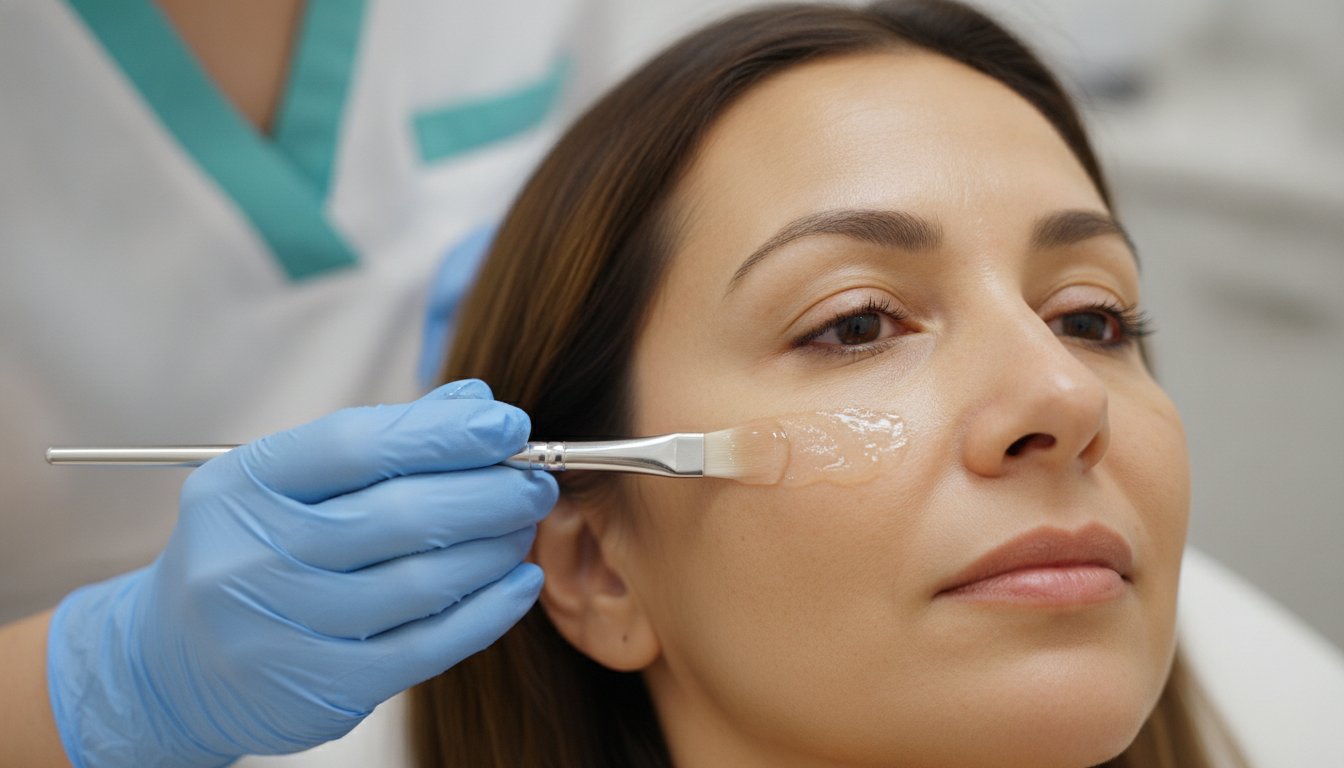
Trichloroacetic Acid, or TCA, is often considered the best chemical peel for sun damage when dealing with moderate to severe pigment. It works by coagulating skin proteins, which causes the damaged cells to eventually lift and flake away. It's incredibly effective for lifting deep sun spots that have settled below the surface. You can typically expect a significant improvement in both texture and tone within one to three sessions. Because these are medium-depth applications, there is a period of downtime where the skin will visibly peel, usually lasting about five to seven days. This controlled process reveals a fresh, more even layer of skin that looks naturally radiant.
Glycolic and Lactic Peels: Brightening Without the Downtime
For those who prefer a more gradual approach, Alpha Hydroxy Acids (AHAs) offer a gentle yet effective solution. Glycolic acid has the smallest molecular size of any AHA, which allows it to penetrate deep into sun-damaged pores to dissolve the cellular bonds holding dead cells together. Lactic acid is a wonderful, hydrating option for skin that might have a compromised barrier from years of UV exposure. We often recommend these as part of our treatment series and bundles because their benefits are cumulative. This series-based approach leads to a brighter complexion without the need for significant recovery time. If you're ready to start your journey toward clearer skin, you can explore our full range of personalized aesthetic services to see which path fits your lifestyle.
Physician-Led vs. At-Home Peels: Why Medical Supervision Matters
Safety is the ultimate luxury in skin rejuvenation. While the convenience of at-home kits might be tempting, finding the best chemical peel for sun damage requires a level of precision that only a clinical environment can provide. Many clients come to us with a natural fear of "chemical burns" caused by improper application or unmonitored products. In a professional setting, this risk is mitigated through a precise neutralization process. This critical step involves applying a specific solution that stops the acid's activity at the exact second it reaches the targeted depth. Without this expert timing, acids can continue to penetrate the dermis, leading to scarring or post-inflammatory hyperpigmentation (PIH), which often makes the original sun damage look worse.
At 512 Aesthetics, we bridge the gap between boutique warmth and rigorous, evidence-based medical standards. Texas regulations are clear: medium and deep peels that reach living tissue are medical procedures. These treatments require a physician's oversight to ensure your skin's structural integrity remains intact while we work to erase years of photoaging. By choosing a physician-led approach, you aren't just getting a treatment; you're entering a collaborative partnership focused on your long-term skin health and self-assurance.
The Safety Profile of Medical-Grade Treatments
During your procedure, a board-certified professional monitors your skin's vascular reaction and "frosting" patterns in real-time. This allows us to customize the pH level and concentration specifically for your skin's current resilience. We also prioritize professional "priming," which involves a hand-selected regimen of medical-grade skincare used for several weeks before your appointment. This preparation ensures your cells respond predictably to the various types of chemical peels available, leading to the subtle, revitalized outcomes we're known for. This meticulous attention to detail is what separates a standard facial from a true medical transformation.
Beyond the Acid: The Value of a Professional Consultation
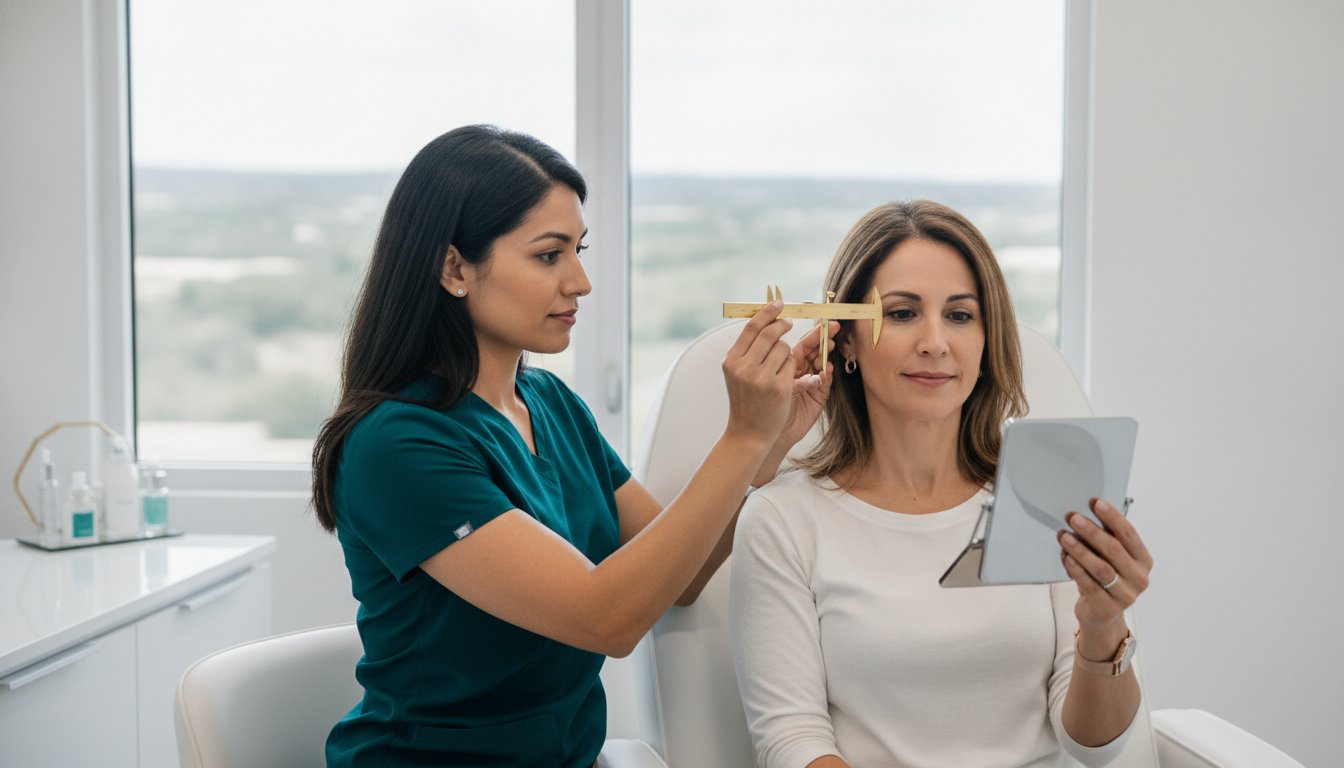
A professional consultation offers insights that a mirror simply cannot provide. We analyze your skin under specialized lighting to identify "hidden" sun damage that hasn't yet reached the surface, allowing us to treat issues before they become visible age spots. This proactive philosophy shifts the focus from a one-off "quick fix" to a comprehensive, long-term plan tailored to your aesthetic objectives. We believe every client deserves an individualized assessment to determine the best chemical peel for sun damage based on their unique "solar depth." If you're ready for a sophisticated analysis of your skin's needs, we invite you to explore our Aesthetic Services and begin your journey toward a clearer complexion.
The Austin Sun Survival Guide: Pre-Peel and Post-Peel Care
Success after receiving the best chemical peel for sun damage depends heavily on your environmental surroundings and how you prepare your skin for the transition. In Central Texas, we recommend scheduling these treatments during "Peel Season," which typically runs from October to April. While our clinical team provides the expertise, the Austin sun remains a powerful force even on overcast days. Choosing these cooler months ensures your newly revealed skin isn't immediately stressed by peak UV levels, allowing for a safer and more predictable recovery. This seasonal timing is part of our commitment to achieving revitalized outcomes that last.
Preparing Your Skin for Success
Preparation is a collaborative effort between you and your provider to ensure your skin is resilient enough for medical-grade acids. You should stop using Retin-A, Tazorac, or high-strength AHAs at least 5 to 7 days before your appointment to prevent over-sensitizing the tissue. Internal wellness also plays a vital role; staying well-hydrated affects how efficiently your skin sheds damaged cells during the post-treatment phase. We often suggest incorporating "Tyrosinase inhibitors" into your routine weeks in advance. These specialized ingredients help regulate melanin production, which is essential for preventing dark spots from rebounding as your skin heals.
The Post-Peel Protocol
The first week after your treatment is a critical window where your skin is exceptionally vulnerable to external stressors. You must avoid all direct sun exposure and heat, such as saunas or hot yoga, for a full 72 hours post-peel. During this time, the "7-day fresh skin window" requires non-negotiable UV protection to prevent new damage. We emphasize using medical-grade SPF because these formulations provide superior broad-spectrum coverage and physical blockers that are gentler on compromised skin than standard drugstore options.
Managing the Texas heat and humidity is another unique challenge for our local clients. Sweating can trap heat against the skin and lead to irritation or even blistering on newly peeled areas. When your skin begins to flake, you must resist the urge to pick or peel the shedding layers. Allow the process to happen naturally to avoid the risk of scarring or uneven pigment. If you're ready to revitalize your complexion safely and effectively, book your personalized skin assessment with our expert team today. We'll help you time your treatment perfectly for the best chemical peel for sun damage results.
The 512 Aesthetics Approach: Personalized Skin Rejuvenation
True skin transformation is rarely the result of a single, isolated procedure. It's a carefully orchestrated sequence of treatments designed to honor your unique anatomy and history. At 512 Aesthetics, we've moved away from the sterile, impersonal feel of traditional clinics to embrace a philosophy of boutique warmth combined with clinical excellence. Finding the best chemical peel for sun damage is only the first step in our collaborative process. We focus on achieving subtle, revitalized outcomes that enhance your natural features, ensuring you look like a more rested version of yourself rather than appearing "peeled" or overdone.
Our approach is rooted in an individualized assessment philosophy. We understand that years of Austin sun exposure affect different layers of the skin simultaneously. By addressing these layers through a hand-selected combination of services, we can achieve a "facial balancing" effect that restores harmony to your complexion. This long-term perspective is why many of our clients choose to join our Elite Membership Club, which provides a structured way to maintain sun-safe, healthy skin throughout every season of the year.
Combining Peels with Xeomin and Microneedling
We often find that the best chemical peel for sun damage works most effectively when paired with complementary modalities. While a medical-grade peel addresses surface-level pigment and texture, it doesn't solve the structural issues caused by UV-induced collagen loss or repetitive muscle movement. For example, Xeomin can be used to soften the "sun-squint" wrinkles around the eyes and forehead, preventing new lines from forming while the peel works to erase existing discoloration.
For deeper structural repair, we often recommend a synergy between chemical exfoliation and Microneedling. This combination triggers deep collagen remodeling, filling in fine rhytids from the inside out while the peel clarifies the skin's tone. By creating a customized "Treatment Series," we can deliver cumulative results that significantly improve the leathery texture often associated with chronic photoaging.
Your Journey to Radiant Skin Starts Here
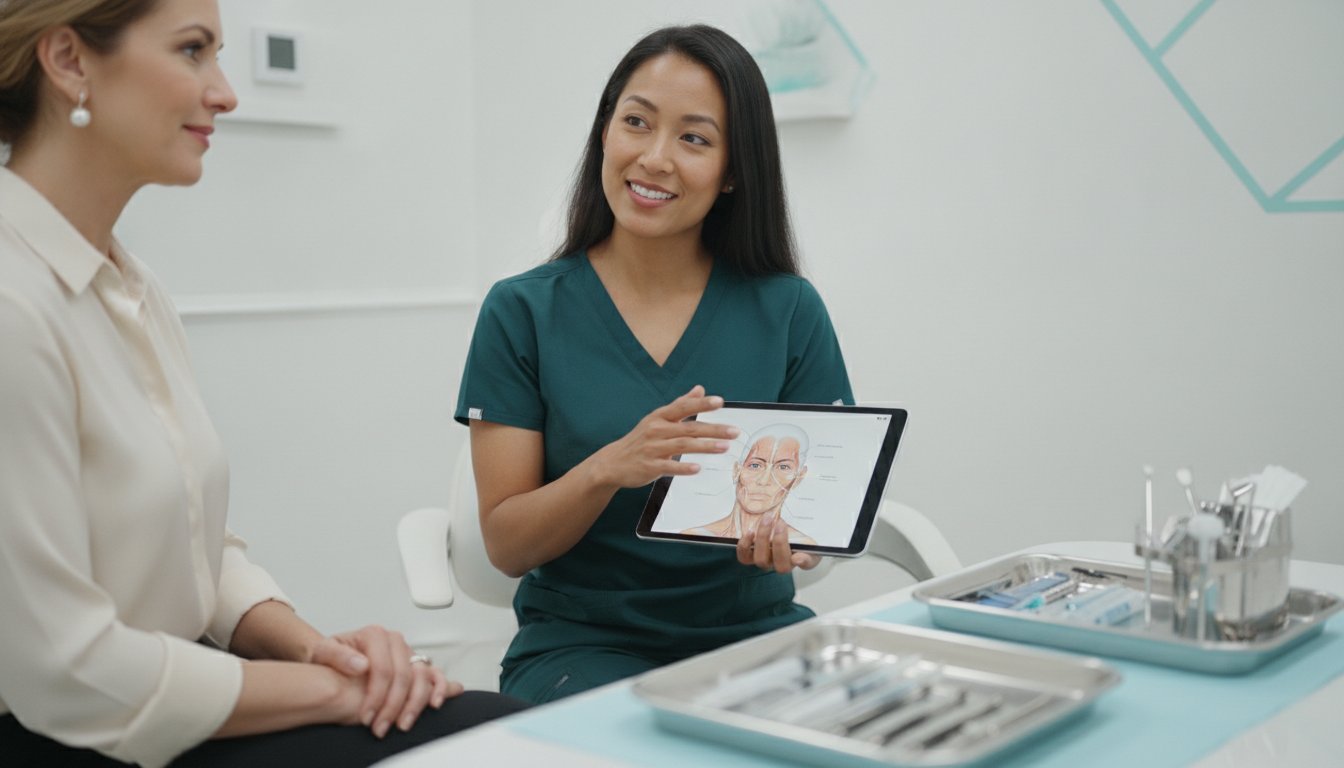
Your first visit to our boutique space is designed to feel like a professional consultation rather than a transaction. You will meet with our board-certified physician to discuss your personal aesthetic objectives and undergo a comprehensive skin analysis. We take the time to explain the science behind each recommendation, ensuring you feel empowered and informed about your care. This personalized, hand-selected approach ensures that every step of your journey is tailored to your specific skin type and lifestyle. If you're ready to move beyond makeup and restore your skin's natural clarity, we invite you to schedule your customized chemical peel consultation in Austin today. Together, we can create an evidence-based plan that delivers the refreshed, revitalized look you deserve.
Step Into Your Most Radiant Skin
Reversing years of Texas sun exposure is a journey that blends the precision of medical science with the artistry of personalized care. By understanding how medical-grade acids reach the specific depth of your pigment and prioritizing professional supervision, you can achieve a clarity that over-the-counter products can't replicate. Finding the best chemical peel for sun damage is about more than just exfoliation; it's about a commitment to long-term skin health and natural-looking rejuvenation.
Since 2021, 512 Aesthetics has served the Austin community with a focus on these subtle, revitalized outcomes. As a physician-owned practice operated by Dr. Saima Jehangir, we utilize customized medical-grade protocols that respect your skin's integrity while erasing stubborn photoaging. We invite you to Book Your Physician-Led Chemical Peel in Austin and begin a tailored treatment plan designed specifically for your aesthetic goals. You deserve to feel confident in your own skin, free from the marks of the past and ready for a brighter, more refreshed future.
Frequently Asked Questions
What is the best chemical peel for dark spots caused by the sun?
Trichloroacetic Acid (TCA) is widely regarded as the best chemical peel for sun damage when targeting stubborn dark spots or solar lentigines. This medical-grade acid works by coagulating skin proteins to lift concentrated melanin from the deeper layers of the epidermis. While lighter Alpha Hydroxy Acids can brighten the surface, a physician-calibrated TCA peel provides the structural reach necessary to address deep-seated pigmentation effectively.
How many chemical peels are needed to see results for sun damage?
Most clients observe a visible improvement in texture and tone after a single medium-depth session, though a series of three to six treatments is often recommended for comprehensive results. The exact number of sessions depends on your "solar depth" and specific aesthetic goals. Superficial peels typically require more frequent sessions, often spaced four weeks apart, to achieve the cumulative brightening and collagen stimulation needed for a revitalized look.
Do chemical peels hurt?
You will likely feel a warm, tingling sensation or a "spicy" heat during the application, but the process shouldn't be painful. We use precise timing and professional cooling techniques to ensure your comfort throughout the procedure. Any temporary discomfort usually subsides within minutes of the neutralization process, leaving the skin feeling tight and firm rather than painful.
Can I get a chemical peel in the summer in Austin?
While it's technically possible, we generally recommend scheduling medium-depth peels during the Austin "Peel Season" from October to April. The intense summer UV index and high heat increase the risk of post-inflammatory hyperpigmentation during the recovery phase. If you choose a lighter treatment during the warmer months, strict adherence to medical-grade SPF and avoiding all outdoor activities for at least 72 hours is essential for safety.
Will my skin actually "peel" off after the treatment?
Visible flaking or peeling is expected with medium-depth treatments, typically starting on day three and concluding around day seven. This shedding is a natural sign that damaged cells are being replaced by fresh, healthy tissue. Superficial peels may only cause minor dryness or "micro-peeling" that isn't always visible to the naked eye but still effectively renews the skin's surface and improves radiance.
Are chemical peels safe for people with darker skin tones?
Chemical peels are safe and effective for darker skin tones when performed under expert physician supervision using the Fitzpatrick scale. We carefully select the appropriate acid concentration and often "prime" the skin with specific inhibitors for several weeks before the procedure. This individualized approach is the key to finding the best chemical peel for sun damage while preventing complications like rebound hyperpigmentation.
How long do the results of a sun damage chemical peel last?
The transformative results of a medical-grade peel can last for several months or even years, provided you maintain a rigorous daily sun protection routine. Because your skin continues to age and react to environmental stressors, we often suggest periodic maintenance treatments to sustain your results. Consistently using high-quality antioxidants and physical sunscreens is the most effective way to preserve your clearer, more even skin tone.